 ultimate-guide
Safe Online Sources for Dog Health Supplements
Table of Contents
- Why Finding Safe Online Sources for Dog Health Supplements Matters
- Understanding FDA Regulation of Pet Supplements
- How to Read Pet Supplement Labels Like a Pro
- Certifications That Signal Quality: The NASC Quality Seal for Pets
- Red Flags That Identify Unsafe Online Retailers
- How to Find Veterinarian Recommended Dog Supplements
- Verifying Retailer Legitimacy and Product Authenticity
- Frequently Asked Questions
Last Updated: September 18, 2026
Why Finding Safe Online Sources for Dog Health Supplements Matters
Pet owners increasingly turn to dog health supplements to support joint health, digestion, immunity, and overall wellness. The challenge isn't finding supplements online, it's finding ones that are actually safe, effective, and what they claim to be. Counterfeit products, mislabeled ingredients, and unscrupulous retailers make this harder than it should be.
The stakes are real: a contaminated supplement can harm your dog, while an ineffective one wastes money and delays treatment your dog might actually need. This guide walks you through how to identify trustworthy online sources, read labels like a pro, and verify that what you're buying is legitimate.
Understanding FDA Regulation of Pet Supplements
The FDA regulates pet supplements differently than human medications. Pet supplements fall under the category of dietary supplements, which means they don't require FDA approval before being sold. Instead, manufacturers are responsible for ensuring their products are safe and accurately labeled.
This regulatory gap creates opportunity for bad actors. Unlike prescription medications, which undergo rigorous testing and approval, supplements can reach the market with minimal oversight. The FDA can only intervene after a problem is reported, not before.
What this means for you: the burden of verification falls on the consumer. The FDA maintains a list of unsafe pet products and issues warnings, but checking that list should be only one part of your due diligence. Look for manufacturers who voluntarily follow stricter standards than the law requires. These are the companies that understand that safety is a competitive advantage, not just a legal obligation.
How to Read Pet Supplement Labels Like a Pro
A quality supplement label tells you exactly what you're getting. A poor one uses vague language, hides ingredient sources, and makes claims that sound scientific but aren't backed by evidence.
Start with the ingredient list. Each ingredient should have a source listed, "chicken cartilage" is better than just "cartilage." Standardized extracts (which contain a guaranteed percentage of active compounds) are more reliable than whole-plant powders. Look for terms like "standardized to X% bioactive compounds," which tells you the manufacturer is controlling for potency.
Next, check the guaranteed analysis section. This shows the minimum and maximum percentages of key nutrients. For joint supplements, you'll see glucosamine and chondroitin listed here. The numbers matter: a supplement with 500mg of glucosamine per serving is different from one with 100mg. Don't assume all products are equivalent just because they target the same health outcome.
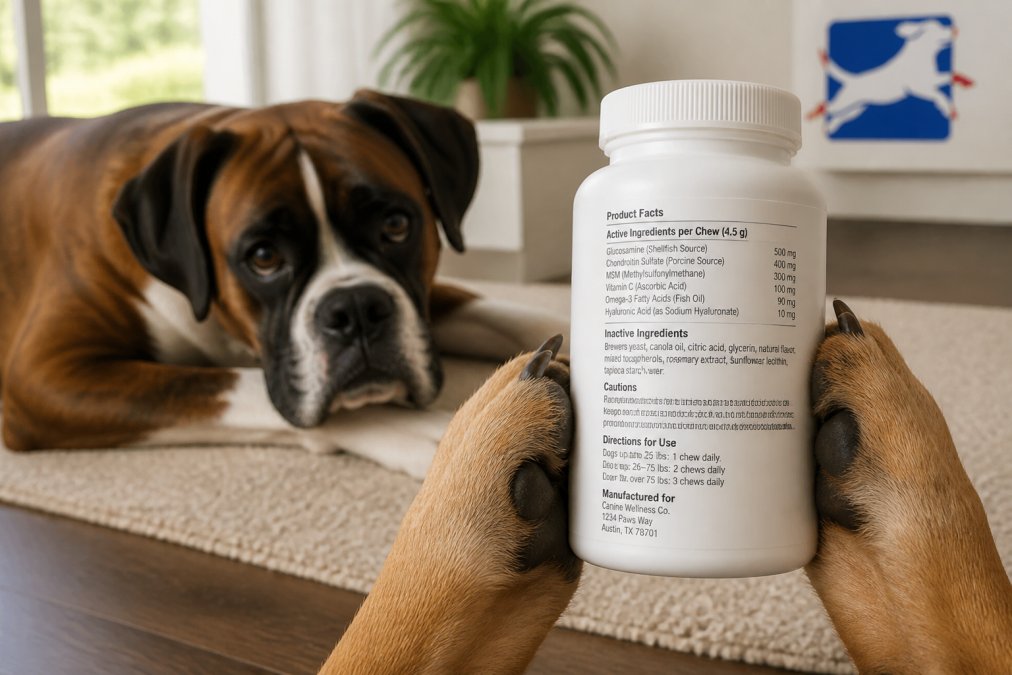
Pay attention to the "Other Ingredients" section. This is where fillers, binders, and preservatives hide. Some products use unnecessary additives that can cause digestive upset in sensitive dogs. Fewer ingredients often means a cleaner product.
Finally, check the expiration date and manufacturing date if listed. Supplements degrade over time, especially those containing omega fatty acids. A product sitting in a warehouse for two years is less potent than a fresh one.
Certifications That Signal Quality: The NASC Quality Seal for Pets
The National Animal Supplement Council (NASC) Quality Seal is one of the most reliable third-party certifications in the pet supplement industry. It's not required by law, which is exactly why it matters: companies that pursue it are choosing to exceed minimum standards.
NASC-certified manufacturers undergo rigorous audits of their facilities, testing protocols, and quality control processes. They verify that products contain what the label claims and that they're free from harmful contaminants like heavy metals, bacteria, and mold. The NASC also maintains a grievance database where consumers can report problems with certified products.
Look for the NASC seal on the label or the manufacturer's website. If a product carries it, you can verify the certification directly on the NASC website by searching the product name or manufacturer. This takes two minutes and gives you concrete assurance that the product has passed independent scrutiny.
How to Read a Certificate of Analysis (CoA)
Many reputable manufacturers publish Certificates of Analysis on their websites or provide them upon request. A CoA is a detailed lab report showing exactly what was tested and what the results were. Learning to read one puts you in control of verification rather than relying solely on a seal.
A legitimate CoA includes:
- Test date and batch/lot number: Confirms the test is recent and matches the product you're buying.
- Tests performed: Look for microbial testing (bacteria, yeast, mold), heavy metal screening (lead, cadmium, arsenic), and potency verification (confirming active ingredients match label claims).
- Lab name and accreditation: The testing lab should be an independent, third-party facility, not the manufacturer's own lab. Look for ISO 17025 accreditation, which indicates the lab meets international standards.
- Pass/fail results: The report should clearly state whether the product passed or failed each test and provide numerical results (e.g., "Lead: <0.5 ppm, PASS").
- Limits used: Reputable labs reference established safety limits from the FDA, EPA, or USP. If limits aren't cited, the lab may be using lenient standards.
If a manufacturer claims third-party testing but won't provide a CoA when asked, that's a red flag. Legitimate companies are transparent about their testing because it's a competitive advantage.
Red Flags That Identify Unsafe Online Retailers
Certain warning signs indicate a retailer you should avoid. If a website makes disease claims, "cures arthritis" or "treats cancer", that's a major red flag. Supplements cannot legally claim to treat, cure, or prevent disease. Only drugs can make those claims. A retailer making them either doesn't understand the law or doesn't care.
How to Find Veterinarian Recommended Dog Supplements
Your veterinarian is your best resource for supplement recommendations because they know your dog's health history, current medications, and specific needs. However, not all vets have equal depth of knowledge about supplements, and some may recommend products based on convenience rather than evidence. The key is asking the right questions.
Questions to Ask Your Veterinarian
- "What does the research show?" Ask your vet to cite specific studies in dogs (not humans or test tubes) that support the supplement's efficacy. Be wary of answers like "I've seen good results" without clinical data. Evidence-based medicine means there's actual peer-reviewed research, not just anecdotal reports.
- "Are there any drug interactions I should know about?" This is critical. Some supplements interfere with common medications. For example, certain joint supplements containing omega-3s can increase bleeding risk if your dog is on aspirin or other blood thinners. Your vet should review your dog's current medications against any supplement you're considering.
- "Which brands do you actually recommend, and why?" Ask for 2-3 specific product names rather than a general category. Ask whether your vet has seen quality consistency issues with any brands or has received complaints from clients.
- "How long should my dog take this, and how will we know if it's working?" A responsible vet will set a timeline (e.g., "Give it 6-8 weeks for joint supplements to show effect") and define what success looks like (reduced limping, improved mobility, etc.).
Evaluating Supplement Claims Your Vet Makes
- Mechanism claims: A vet should be able to explain how a supplement works. "Glucosamine supports cartilage structure by providing building blocks for glycosaminoglycans" is a mechanistic explanation. "It's good for joints" is not.
- Dosage justification: Ask why they're recommending a specific dose. Is it based on the dog's weight? Age? Condition severity? A vet who can't justify the dose may be defaulting to a standard recommendation without tailoring it to your dog.
- Ingredient transparency: If your vet recommends a branded product, ask them to walk you through the ingredient list. Can they explain what each ingredient does and why it's included? If they can't, they may not have thoroughly evaluated the product.
Red Flags in Veterinary Supplement Recommendations
- Your vet recommends a supplement for a condition without mentioning that your dog should also see a specialist (e.g., recommending only a joint supplement for severe arthritis without referring to an orthopedic surgeon).
- Your vet cannot name the manufacturer of the supplement or describe their quality standards.
- Your vet recommends the same supplement to every dog with a given condition without considering individual differences (age, weight, other health issues).
Leveraging Veterinary Relationships with Manufacturers
- Ask whether your vet receives any commission or incentive for recommending a particular brand. Transparency here builds trust.
- Ask how long your vet has been recommending the brand and whether they've seen quality issues or customer complaints.
- Cross-reference your vet's recommendation against third-party certifications (NASC, USP, NSF) and available Certificates of Analysis.
Verifying Retailer Legitimacy and Product Authenticity
Before buying from any online retailer, verify their legitimacy. Check if they're registered as a business in their state. Search for the company name plus "complaints" or "scam" to see if others have reported problems. The Better Business Bureau maintains complaint records that can reveal patterns of issues.
| Verification Step | What to Check | Red Flag |
|---|---|---|
| Retailer legitimacy | Business registration, contact info, reviews | No physical address or phone number |
| Product authenticity | Packaging quality, label alignment, batch number | Spelling errors, misaligned labels, unverifiable batch codes |
| Manufacturer credibility | Official website, authorized retailer list | Not listed as authorized retailer |
| Third-party testing | NASC seal, USP verification, NSF certification | No independent certifications present |
| Ingredient transparency | Standardized extracts, ingredient sources | Vague sourcing, "proprietary blends" |
Frequently Asked Questions
What certifications should I look for when buying dog health supplements online?
Look for the NASC quality seal for pets, which indicates the product meets rigorous manufacturing standards. Also check for third-party testing verification and a Certificate of Analysis from an independent lab. These certifications confirm ingredient purity and potency. Always verify certifications by contacting the manufacturer.
How can I verify if an online pet supplement retailer is legitimate?
Legitimate retailers provide clear contact information and transparent return policies. Check if they list a physical address and phone number. Review customer feedback across multiple platforms. Verify they provide detailed product information, including ingredient sourcing and manufacturing location.
Are veterinarian recommended dog supplements safer to buy online?
Veterinarian recommended dog supplements carry more credibility. When purchasing online, confirm the product matches your veterinarian's recommendation exactly by comparing the label details. This ensures you're getting the specific formulation your dog needs.
What red flags should I avoid when shopping for pet health products online?
Avoid retailers with vague ingredient lists or claims that sound too good to be true. Red flags include lack of third-party testing information, no Certificate of Analysis available, missing manufacturer details, and no clear return policy.