 blog
Best Dog Apparel for Winter 2026: 7 Picks That Fit
Table of Contents
- How to Choose the Best Dog Apparel for Winter 2026
- Quick Comparison: Dog Winter Apparel Features
- How to Measure a Dog for a Winter Coat
- Signs Your Dog Is Too Cold on Winter Walks
- The Best Dog Boots for Snow and Ice
- Climate-Specific Picks and Special-Needs Fits
- Conclusion
- Frequently Asked Questions
Last Updated: September 14, 2026
How to Choose the Best Dog Apparel for Winter 2026
Finding the best dog apparel for winter 2026 starts with matching the coat to your dog's body, your local climate, and how long you actually stay outside. Shop and Bark has helped dog owners sort through that decision for years, and the pattern is consistent: the right layer beats the thickest layer. A coat that fits badly traps cold air at the belly and rubs at the shoulders, no matter how much fill it has.
The core structure of any winter dog jacket comes down to three things: the shell, the insulation, and the fit. Get those right and everything else, from reflective piping to leash access points, is a bonus.
Waterproof vs. Water-Resistant Dog Jackets
A waterproof dog jacket uses a sealed membrane and taped seams to block liquid water outright. A water-resistant jacket uses a DWR coating that sheds light rain and snow but wets through in sustained precipitation. For slush, freezing rain, and long walks, waterproof wins. For dry cold and quick trips, water-resistant is lighter and usually more breathable.
The trade-off is real: fully waterproof shells trap more heat and cost more, while water-resistant fabrics let moisture escape but need re-treating over time. If your dog runs hot, a water-resistant shell over a fleece lining often works better than a heavy waterproof coat.
Insulation Types and Thermal Efficiency
Synthetic fill and down alternative are the two workhorses in dog winter coats. Synthetic fill keeps insulating when damp, dries fast, and is machine washable, which matters for a dog that finds every puddle. Down alternative is lighter for the same warmth but loses loft when wet.
For most dogs in cold weather, a synthetic fill with a fleece lining hits the sweet spot. The insulation value depends as much on coverage as on thickness: a coat with belly coverage and a high collar holds warmth far better than a thin back-only layer. Windproof outer fabric also matters more than most owners expect, because wind strips trapped heat faster than still air does.
Quick Comparison: Dog Winter Apparel Features
| Feature | What It Does | Best For |
|---|---|---|
| Waterproof membrane, taped seams | Blocks liquid water completely | Slush, freezing rain, wet snow |
| DWR coating | Sheds light precipitation | Dry cold, short walks |
| Synthetic fill | Insulates when damp, washable | Most dogs, active walks |
| Fleece lining | Adds warmth, feels soft | Senior dogs, short-haired breeds |
| Belly coverage | Protects core and underside | Cold-sensitive and small dogs |
| Reflective piping | Improves visibility safety | Early and late walks |
| Quick-release buckles | Fast on and off | Anxious or wriggly dogs |
How to Measure a Dog for a Winter Coat
Getting the size right is the single biggest factor in whether a coat gets worn or sits in a drawer. Measure your dog standing, not lying down, and use a soft measuring tape. You need three numbers: girth, back length, and neck circumference.
- Girth: wrap the tape around the widest part of the chest, just behind the front legs. This is the most important measurement.
- Back length: measure from the base of the neck to the base of the tail along the spine.
- Neck circumference: measure around the neck where the collar sits.
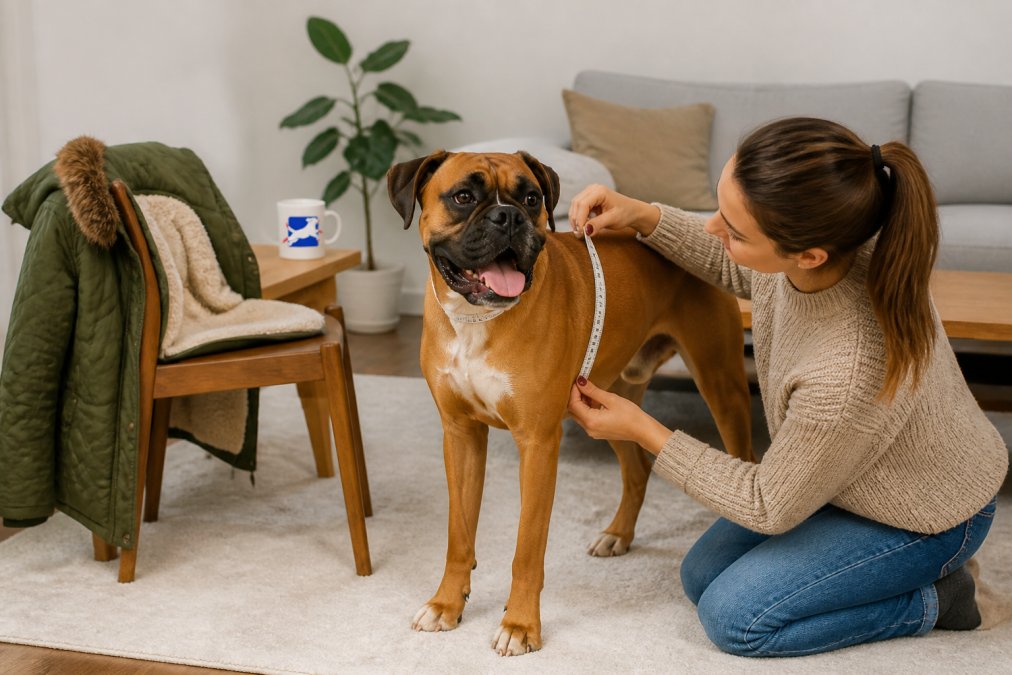
A common mistake is sizing up "to be safe." A coat that's too large slides sideways, exposes the belly, and catches on the dog's legs. When a dog falls between two sizes, check the brand's size chart accuracy notes and prioritize the girth measurement over back length. Adjustable straps around the chest and belly let you fine-tune the fit, and an articulated fit that follows the shoulders preserves range of motion.
Signs Your Dog Is Too Cold on Winter Walks
Shivering is the obvious sign, but it's rarely the first one. Watch for lifting paws, tucking the tail, slowing down, or refusing to walk. A dog that stops mid-walk and holds up a paw is telling you the ground is too cold for its pads.
Other early signals include hunched posture, whining, and turning back toward home. Small breeds, short-haired dogs, seniors, and puppies lose heat faster and reach their cold weather tolerance sooner. Hypothermia prevention starts with short trips, a properly fitted coat, and boots when pavement or snow is freezing. If your dog shows these signs, cut the walk short and warm up gradually.
The Best Dog Boots for Snow and Ice
Boots protect paws from ice, rock salt, and frozen surfaces, and they're the difference between a two-minute walk and a real one in deep cold. The best dog boots for snow and ice stay on, flex with the paw, and have a grippy sole.
Fit is everything with boots. Too loose and they twist off in the first block; too tight and they cut circulation. Look for two adjustable straps per boot, a flexible sole, and a cuff that sits above the dew claw. Introduce boots indoors for a few minutes at a time before heading outside. Many owners find that a set that fits the front paws well is worth buying in a slightly different size for the back, since rear paws are often narrower.
Climate-Specific Picks and Special-Needs Fits
Most winter dog apparel guides give one generic recommendation. That is the gap this section fills: the right coat depends less on the calendar and more on what your winter actually feels like. Four climate profiles cover most of the country, and each one points to a different build.
Wet coastal cold (rain, sleet, heavy wet snow, temperatures hovering near freezing). Prioritize a waterproof membrane with taped seams over insulation. A soaked synthetic fill loses warmth fast, and a wet dog loses heat roughly 25 times faster than a dry one. A waterproof shell with a light fleece lining and a high collar handles most coastal winters better than a bulky parka.
Dry arctic cold (single digits and below, low humidity, wind). Windproof fabric and loft matter most here. Look for a tightly woven or laminated shell, a high collar that covers the neck, and belly coverage. Layering works: a fleece base layer under a windproof shell gives more warmth and more adjustability than one heavy coat, because you can remove a layer when the dog goes indoors.
Mountain and high-desert cold (cold nights, sunny days, big temperature swings). The challenge is overheating on a sunny afternoon walk. Choose a coat with a removable liner or a shell you can wear alone, and favor breathable fabrics that let moisture escape during activity.
Mild winters with occasional cold snaps (above freezing most days, a few hard freezes). A water-resistant shell with a fleece lining is plenty. A heavy waterproof coat here causes more problems than it solves, because a dog that overheats on a 45-degree walk will resist the coat next time.
Senior Dogs, Anxiety, and Sustainable Materials
Older dogs need warmth and easy movement more than heavy insulation. Arthritic joints stiffen in cold, and a coat that requires lifting a stiff leg through a sleeve can turn a short walk into a struggle. Look for a wide belly panel that supports the core without pressing on the hips, a low-cut chest so the dog can step in without a high lift, and quick-release buckles rather than over-the-head pullovers. A fleece lining adds comfort without weight, and a coat that covers the hips helps a dog with rear-leg weakness stay out longer.
Anxiety and sensory-friendly designs matter more than most guides admit. Some dogs tolerate a simple pullover better than a coat with loud hook-and-loop closures, dangling straps, or crinkly fabric. Quiet snaps, minimal hardware, and a snug but non-restrictive fit reduce stress. If your dog has never worn a coat, introduce it indoors for a few minutes at a time with treats, and build up before the first cold walk.
Sustainability is a growing factor for many owners. Recycled synthetic fill, PFC-free water repellent finishes, and machine washable construction reduce the environmental footprint and extend the coat's life. A durable coat that lasts several winters beats a cheap one replaced every year, and it is easier to keep clean.
Conclusion
The best dog apparel for winter 2026 comes down to three measurements and one honest look at your climate. Nail the girth, choose the shell and insulation to match your weather, and add boots when the ground freezes. Shop and Bark stocks winter coats, boots, and cold-weather gear with a fast, user-friendly shopping experience and a customer service team that helps you find the right size the first time. Browse the winter collection at Shop and Bark and get your dog set for the season.
Frequently Asked Questions
What are the best clothes for dogs in winter?
The best dog winter apparel combines a waterproof shell, synthetic fill or fleece lining, and full belly and chest coverage. Look for an adjustable fit, reflective piping for visibility, and a leash access point. Short-haired, small, senior, and arthritic dogs benefit most from a coat, while thick double-coated breeds may only need one in arctic conditions. Always check the size chart and measure your dog's girth, back length, and neck circumference before ordering.
Do vets recommend dog sweaters for cold weather?
Many veterinarians recommend a sweater or coat for dogs with thin coats, low body fat, or conditions like arthritis that worsen in cold weather. A sweater works well for dry, mild winter days, while a waterproof jacket with thermal insulation is better for snow, sleet, and wind. Watch your dog for signs of cold such as shivering, lifting paws, or slowing down, and shorten walks when temperatures drop sharply.
How do I know if my dog needs a winter coat?
Your dog likely needs a coat if it has a short or single-layer coat, is small, senior, or arthritic, or shivers and slows down on winter walks. Signs your dog is too cold include tucked tail, hunched posture, whining, and lifting paws off the ground. Breeds with thick double coats, such as huskies, often need less coverage except in extreme cold. A quick test is to feel your dog's ears and paws after a few minutes outside.
Are dog boots necessary for winter walking?
Dog boots help on snow, ice, and salted sidewalks. They protect paws from ice balls, chemical deicers, and frostbite, and they improve traction for senior dogs or those with mobility issues. The best dog boots for snow and ice have flexible rubber soles, adjustable straps, and a snug but not tight fit. Not every dog tolerates boots, so introduce them indoors with short sessions and treats before heading outside.
Choosing winter gear for your dog doesn't have to mean guessing at sizes or overpaying for layers that don't fit. Shop and Bark offers affordable, high-quality dog apparel and accessories with a convenient online shopping process and a customer service-oriented approach that helps you get the right fit. Find coats, boots, and cold-weather essentials backed by years of industry experience. Get started with Shop and Bark and keep your dog warm, dry, and comfortable all winter.