 blog
Best Dog Health Supplements for Joints: 2026 Guide
Table of Contents
- What to Look for in Dog Joint Supplements
- Signs of Joint Pain in Dogs: When to Take Action
- When to Start Dog Joint Supplements
- Glucosamine for Dogs Dosage: What You Need to Know
- How Dog Joint Supplements Interact with Prescription Medications
- Breed-Specific Joint Health Profiles
- Frequently Asked Questions
Last Updated: September 16, 2026
What to Look for in Dog Joint Supplements
The best dog health supplements for joints combine proven ingredients with a form your dog's body can actually absorb. At Shop and Bark, we've cultivated a fast, user-friendly shopping experience that ensures you can easily find affordable, top-tier items to keep your furry friends happy and healthy.
Joint supplements for dogs are dietary additives designed to support cartilage, synovial fluid, and overall joint comfort as dogs age or recover from strain. The category splits into two broad groups: structural ingredients that rebuild tissue, and anti-inflammatory ingredients that manage discomfort.
Key Ingredients That Support Canine Joints
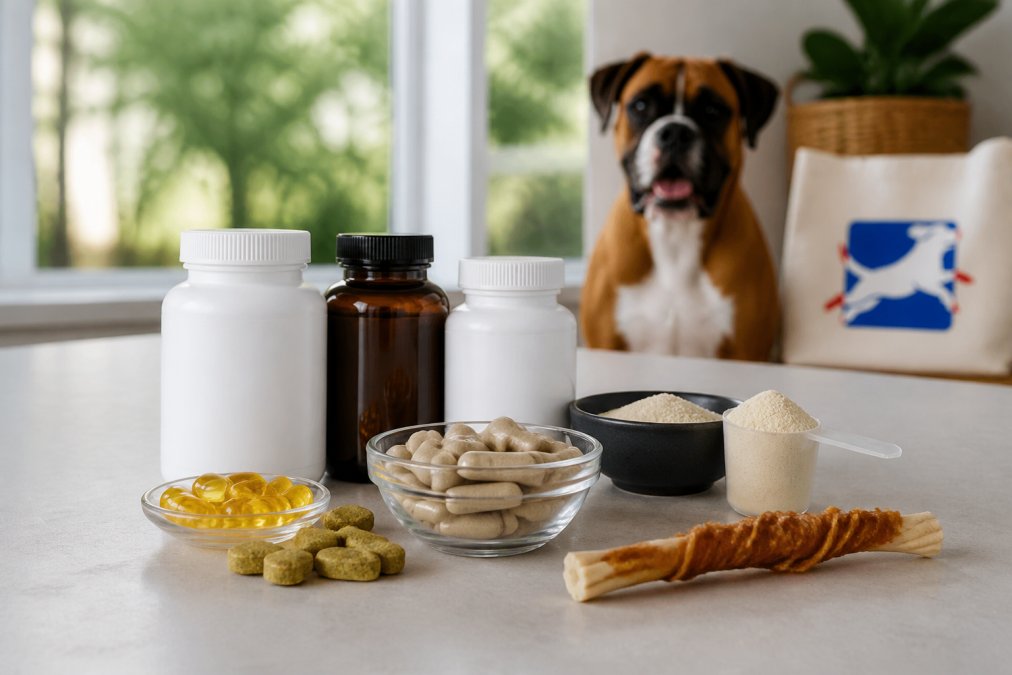
Glucosamine and chondroitin remain the backbone of most formulas. Glucosamine supports cartilage repair, while chondroitin helps cartilage retain water and elasticity. Methylsulfonylmethane, usually listed as MSM, works on inflammation and connective tissue. Omega-3 fatty acids, particularly from fish oil, reduce joint inflammation. Green-lipped mussel supplies a natural mix of omega-3s and glycosaminoglycans. Hyaluronic acid supports synovial fluid, the lubricant between joints. Collagen provides raw material for connective tissue, and palmitoylethanolamide, or PEA, is gaining attention for nerve-related joint discomfort.
Bioavailability and Delivery Methods
Bioavailability describes how much of an ingredient your dog's body actually absorbs and uses. This is where many products quietly fail. A label can list a generous glucosamine dose, but if the source is poorly absorbed, your dog gets little benefit.
Chewables and soft chews are the most popular delivery method because dogs accept them easily. Powders mix into food and suit picky eaters. Capsules and tablets work well for precise dosing but can be harder to administer.
Signs of Joint Pain in Dogs: When to Take Action
Joint stiffness in dogs often shows up as subtle behavior changes before obvious limping. Catching these early gives you far more options.

Watch for reluctance to climb stairs, slowing down on walks, stiffness after rest, licking at a specific joint, or shifting weight off a limb. Some dogs become irritable when touched near the hips or shoulders. Others simply stop jumping onto the couch, which owners often mistake for aging rather than pain.
Hip dysplasia and other orthopedic conditions can produce these signs early in life, while degenerative joint disease tends to appear gradually in older dogs. If you notice any of these changes, a veterinary exam should come before any supplement.
When to Start Dog Joint Supplements
Preventative care is the strongest argument for starting early. Many veterinarians suggest beginning joint support for large-breed dogs around middle age, and sooner for breeds with known joint risks.
The reasoning is simple. Supplements support cartilage and joint lubrication best before significant damage occurs. Once arthritis is advanced, supplements can still help manage comfort, but they cannot reverse structural change.
For dogs with a family history of hip dysplasia, or breeds prone to joint issues, starting in early adulthood is a reasonable, low-risk step. Always confirm timing with your veterinarian, especially if your dog is already on medication.
Glucosamine for Dogs Dosage: What You Need to Know
Glucosamine dosing for dogs is weight-based, and the range most veterinarians work within is broader than most labels suggest.
| Dog's Weight | Typical Daily Glucosamine (Maintenance) |
|---|---|
| Under 10 lbs | 250-500 mg |
| 10-25 lbs | 500-750 mg |
| 25-50 lbs | 750-1,000 mg |
| 50-75 lbs | 1,000-1,500 mg |
| 75-100 lbs | 1,500-2,000 mg |
| Over 100 lbs | 2,000-3,000 mg |
These figures assume glucosamine hydrochloride or sulfate as the primary source. If the label lists a blend of glucosamine, chondroitin, and MSM, the glucosamine portion is what you compare against the range above, not the total milligram count of the blend.
Loading Phase vs. Maintenance Phase
Many veterinarians recommend a loading phase for the first four to six weeks, roughly double the maintenance dose, before stepping down. The logic is that glucosamine works by saturating cartilage tissue over time, and reaching a therapeutic tissue level faster may produce noticeable mobility changes sooner. After the loading period, most dogs transition to the maintenance range in the table.
Splitting the Dose
Glucosamine is generally better absorbed when divided across two meals rather than given in one large dose. For a 60-lb dog on 1,200 mg daily, that means 600 mg in the morning and 600 mg in the evening. Splitting also reduces the chance of loose stool, which is the most common side effect of a sudden dose increase.
What Actually Matters More Than the Exact Number
Three variables matter more than hitting a precise milligram target:
- Consistency. Missing days defeats the saturation mechanism. A slightly lower daily dose given every day outperforms a higher dose given sporadically.
- The form of glucosamine. Glucosamine sulfate and glucosamine hydrochloride are the two common forms.
- What it is paired with. Glucosamine alone is less effective than glucosamine combined with chondroitin, and often MSM. A formula that lists glucosamine but no chondroitin is doing half the job.
When to Adjust
Reassess the dose with your veterinarian at the four-to-six-week mark and again at three months. If you see no change in mobility at a full maintenance dose after three months of consistent use, the issue may not be dose, it may be the ingredient profile, an undiagnosed condition, or a need for a different approach entirely.
How Dog Joint Supplements Interact with Prescription Medications
The safe approach is straightforward. Bring your supplement labels to your vet appointment and review them alongside every prescription. A veterinarian can flag conflicts before they cause a problem.
Breed-Specific Joint Health Profiles
Large and Giant Breeds: Hip and Elbow Dysplasia
Chondrodystrophic Breeds: Intervertebral Disc Disease
Flat-Faced (Brachycephalic) Breeds: Elbow and Spinal Concerns
Working and Athletic Breeds: Activity-Related Inflammation
Small Toy Breeds: Luxating Patella
How to Use This
Frequently Asked Questions
What is the best joint supplement for dogs?
The best dog joint supplements contain a combination of glucosamine, chondroitin, and omega-3 fatty acids. Look for products with methylsulfonylmethane (MSM) for inflammation and green-lipped mussel for additional cartilage support. Bioavailability matters: liquid or chewable forms may absorb faster than hard tablets. Always check for a veterinarian-recommended formula and consult your vet before starting any supplement, especially if your dog takes prescription medications.
At what age should I start giving my dog joint supplements?
Start dog joint supplements when your dog reaches middle age, typically around 6 to 8 years for large breeds and 8 to 10 years for smaller dogs. For breeds prone to hip dysplasia or degenerative joint disease, vets may recommend starting as early as 4 years old. Preventative care with omega-3 fatty acids and glucosamine can support long-term mobility, especially for active dogs or those with a family history of orthopedic conditions.
Do joint supplements actually work for dogs?
Clinical efficacy varies by ingredient and your dog's specific condition. Glucosamine and chondroitin have shown moderate success in reducing joint stiffness and improving mobility in dogs with arthritis. Omega-3 fatty acids reduce inflammation, while hyaluronic acid supports synovial fluid for better joint lubrication. Results take 4 to 8 weeks. Supplements work best as part of a broader plan that includes weight management and veterinarian care.
Are there natural alternatives for dog joint health?
Natural alternatives include green-lipped mussel, collagen, and palmitoylethanolamide (PEA), which support joint comfort without synthetic additives. Antioxidant support from turmeric or vitamin C can also help reduce inflammation. However, natural does not always mean safe for every dog. Some herbs interact with prescription medications. Always check with your veterinarian before adding any new supplement, and introduce one ingredient at a time to monitor your dog's response.
Sorting through joint supplements can feel overwhelming, especially when every label promises the same results. Shop and Bark makes it simpler by offering a fast, user-friendly shopping experience and a customer service team ready to help you find the right formula for your dog's breed, age, and needs. Browse our joint health essentials, compare ingredients side by side, and get everything shipped quickly to your door. Shop Now and give your dog the mobility support they deserve.