 ultimate-guide
What Essential Supplies Do New Puppy Owners Really Need?
Last Updated: October 24, 2026
Quick Summary
Essential supplies new puppy owners need include a crate for safety, food and water bowls, a collar and leash, bedding, puppy food, toys, puppy pads, and an ID tag. Prioritize items based on when they're actually needed: arrival day essentials like containment and hydration, first week supplies like food and training pads, and longer-term investments as your puppy grows.
- A crate prevents accidents and keeps your puppy safe during unsupervised time.
- Use stainless steel or ceramic water bowls, as plastic can harbor bacteria and puppies may chew through it.
- Ask your breeder or shelter what food your puppy has been eating to prevent digestive upset from sudden diet changes.
- An ID tag should be ordered immediately as the fastest way home if your puppy escapes.
- Puppy pads and enzymatic cleaners are essential for housebreaking and preventing repeat accidents in the same spot.
Table of Contents
- What You Need Before Bringing Your Puppy Home
- Creating a New Puppy Checklist That Fits Your Situation
- Puppy Crate and Bedding Setup for Safe Confinement
- Food, Water Bowls, and Complete Puppy Nutrition
- Puppy Toys and Teething Toys for Development
- Puppy-Proofing Essentials and Safety Hazards
- Collar, Harness, Leash, and Identification
- Toilet Training Supplies and Cleaning Essentials
- Frequently Asked Questions
What You Need Before Bringing Your Puppy Home
Bringing home a new puppy is exciting and overwhelming in equal measure.
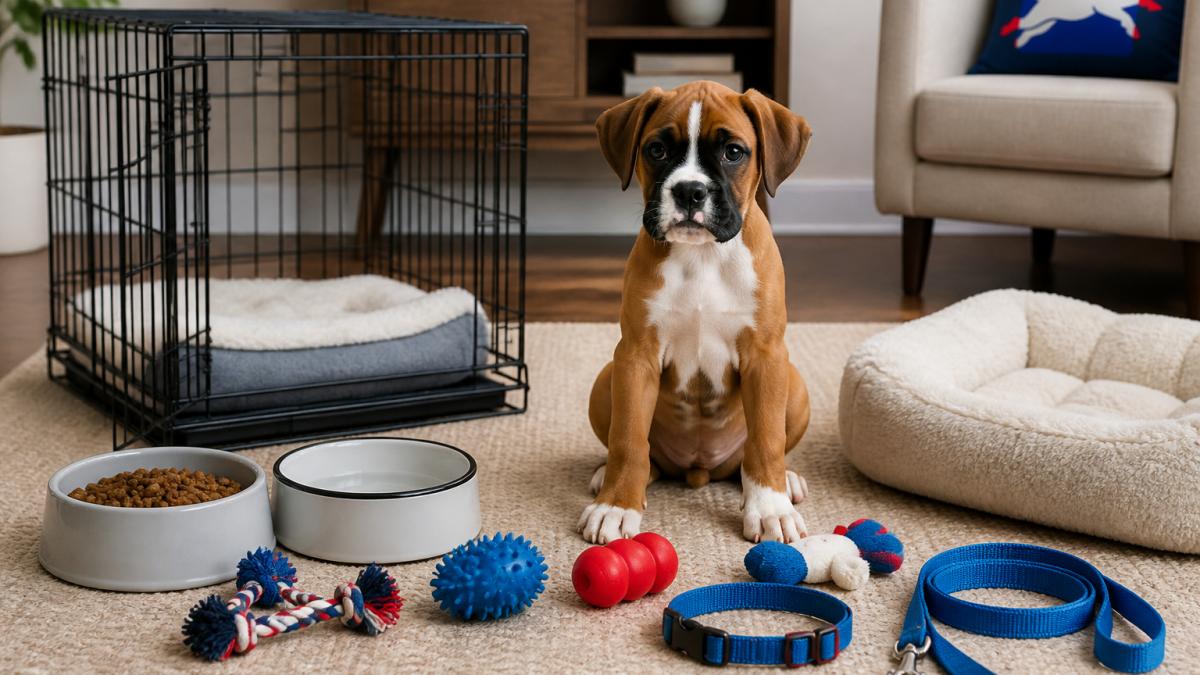
The key is prioritizing what actually prevents problems versus what's nice to have. A crate prevents accidents and keeps your puppy safe. A collar prevents escape. Food and water bowls are non-negotiable.
Arrival Day Essentials
On the day your puppy comes home, focus on three things: containment, hydration, and comfort. Your puppy needs a safe space to decompress, access to water, and something familiar to rest on.
A crate is your first purchase. Not for punishment, for safety. Puppies explore by chewing and swallowing, and a crate prevents access to hazards when you can't supervise.
Water bowls should be available immediately. Puppies dehydrate quickly. Use a stainless steel or ceramic bowl, plastic can harbor bacteria and some puppies chew through it.
First Week Supplies
By the end of the first week, add items that support routine and training. Food becomes critical, ask the breeder or shelter what your puppy has been eating and have that on hand to prevent digestive upset from sudden diet changes.
An ID tag should be ordered immediately, even if microchipping happens later. If your puppy escapes, a tag is the fastest way home.
Longer-Term Investments
After the first month, invest in items that scale with your puppy's growth. A larger bed suited to your puppy's adult size prevents waste. A harness or properly fitted collar prevents neck strain during walks. Advanced enrichment toys keep an older puppy mentally stimulated.
New puppy owners should prioritize supplies based on when they're actually needed.
| Timeline | Key Supplies | Purpose |
|---|---|---|
| Arrival Day | Crate, bedding, water bowl, collar, leash | Safety, hydration, comfort |
| First Week | Food, puppy pads, waste bags, ID tag, toys | Routine, training, identification |
| After First Month | Larger bed, harness, enrichment toys, flea prevention | Growth support, mental stimulation |
Creating a New Puppy Checklist That Fits Your Situation
A generic checklist misses what your specific puppy actually needs. A Chihuahua's requirements differ from a German Shepherd's. A puppy in an apartment differs from one with a yard. Your budget matters too.
Tailoring Your List by Breed and Size
Breed and size shape nearly every purchase. Small breeds need smaller collars, harnesses, and crates.
Consider your puppy's energy level. High-energy breeds need more toys and enrichment. Low-energy breeds may need less.
Age at arrival changes priorities. An eight-week-old puppy needs different toys than a sixteen-week-old. Younger puppies require more frequent feeding, so multiple bowls help.
Budget-Friendly and Secondhand Options
Quality matters, but cost doesn't always reflect quality. Some items hold up to secondhand use; others don't. Crates, beds, and gates are safe to buy used if they're clean and structurally sound.
Shop strategically. A quality crate costs more upfront but lasts through multiple puppies. Cheaper toys often break and create choking hazards. Invest in essentials; compromise on conveniences.
Puppy Crate and Bedding Setup for Safe Confinement
A crate is a tool for safety and housebreaking, not punishment. When introduced properly, puppies view it as a den. The setup matters, the right size, comfortable bedding, and proper placement make the difference between a tool that works and one your puppy resists.
Choosing the Right Crate Size
A crate should be large enough for your puppy to stand, turn around, and lie down comfortably, but not so large that your puppy can eliminate in one corner and sleep in another. Explore the best dog crates for puppy training to find options that meet these sizing requirements.
Material matters. Wire crates offer visibility and airflow. Plastic crates provide den-like security. Both work; choose based on your space and your puppy's temperament. Soft-sided crates are portable but less durable for heavy chewers.
Bedding, Blankets, and Comfort Items
Puppies soil bedding frequently in the first weeks. Use washable options or inexpensive blankets you can replace easily.
Blankets serve multiple purposes.
Some puppies benefit from a white noise machine or calming music near the crate. Others do better with a toy or chew item.
Food, Water Bowls, and Complete Puppy Nutrition
Feeding your puppy properly supports growth, development, and housebreaking. The right bowls and food make this simpler.
Selecting Appropriate Bowls and Feeders
Stainless steel bowls are durable, easy to clean, and don't harbor bacteria like plastic can. Ceramic works too. Avoid plastic for water, puppies often chew through it.
Water should be available constantly. Food is typically given 3-4 times daily for puppies under six months, then twice daily after. Consistent feeding schedules support housebreaking, puppies eliminate predictably after eating.
Complete Puppy Food and Transition Planning
Your puppy needs complete puppy food formulated for growth. Adult food lacks the nutrients puppies require.
Some puppies have sensitivities or allergies. Watch for vomiting, diarrhea, or itching. Your veterinarian can recommend alternatives if needed. Treats should be limited, they add calories and can unbalance nutrition.
The American Veterinary Medical Association's puppy care guidelines provide evidence-based feeding recommendations by age and breed size.
Puppy Toys and Teething Toys for Development
Toys prevent boredom, support development, and redirect natural chewing instincts. The right toys are safe, age-appropriate, and engaging.
Age-Appropriate Toy Selection
Young puppies (8-12 weeks) need soft toys they can carry and mouth.
Avoid toys with small parts that can be swallowed. Check toys regularly for damage. A toy with a loose seam or missing stuffing becomes a choking hazard. Rotate toys to maintain interest.
Enrichment and Safe Chewing Options
Puzzle toys and treat-dispensing toys keep puppies mentally stimulated. These toys slow eating, prevent boredom, and build problem-solving skills.
Rawhide and similar products pose choking risks, supervise or avoid them. Bully sticks and yak chews are safer alternatives, though still require supervision.
The Pet Industry Joint Advisory Council's toy safety standards outline what makes toys safe for puppies.
Puppy-Proofing Essentials and Safety Hazards
A puppy explores by chewing and swallowing. Puppy-proofing prevents emergencies. This means removing hazards and creating safe zones.
Gates, Barriers, and Safe Areas
Baby gates designed for pets restrict access to unsafe areas.
Extra wide pet gates with safety features(page:4) help you create confined, puppy-safe spaces throughout your home.
A designated puppy-proofed room is ideal, tile or vinyl flooring for easy cleaning, minimal furniture, and no access to electrical cords or toxic substances.
Common Household Hazards to Address
Puppies chew through electrical cords, ingest toxic plants, and swallow small objects. Secure cords, remove toxic plants, and pick up small items. Cleaning supplies, medications, and human food toxic to dogs must be locked away.
Furniture edges, table legs, and baseboards tempt chewing puppies. Bitter sprays deter chewing; redirecting to appropriate toys teaches what's acceptable.
Collar, Harness, Leash, and Identification
Walking your puppy safely requires the right gear. A collar or harness, leash, and ID tag are non-negotiable.
Choosing Appropriately Sized Walking Gear
Collars should fit snugly but allow two fingers underneath. Puppies outgrow collars quickly, measure monthly. Harnesses distribute pressure across the chest and back, reducing strain on the neck.
A leash 4-6 feet long works for most situations. Retractable leashes can encourage pulling and pose entanglement risks with puppies. A standard leash gives you better control and safety.
ID Tags and Microchip Preparation
An ID tag with your current phone number is the fastest way home if your puppy escapes. Order one immediately, don't wait. Update the tag if you move or change phone numbers.
Microchipping provides permanent identification. Many veterinarians recommend microchipping puppies around 8-12 weeks. The process is quick and relatively painless. Register the microchip immediately and keep registration information current.
Toilet Training Supplies and Cleaning Essentials
Housebreaking requires supplies that support the process and manage accidents. Puppy pads, waste bags, and enzymatic cleaners are essentials.
Puppy Pads, Waste Bags, and Cleanup Tools
Puppy pads absorb accidents indoors during the housebreaking phase. Absorbent, leak-proof pads prevent damage to flooring. Place them in a designated area and reward your puppy for using them.
Waste bags are essential for outdoor walks. Biodegradable options reduce environmental impact. A waste bag dispenser clips to the leash for convenience.
Super absorbent leak-proof puppy training pads(page:5) provide reliable protection during housebreaking.
Odor Control and Deep Cleaning
Enzymatic cleaners break down urine and feces at the molecular level, eliminating odor that attracts puppies back to the same spot.
For deep cleaning, enzymatic products work on carpets, tile, and hardwood. Some puppies respond better to outdoor housebreaking; others need indoor pads first.
Setting up for your new puppy doesn't require perfection, it requires thoughtfulness.
Frequently Asked Questions
What should I buy before bringing a puppy home?
Before your puppy arrives, gather the essential supplies for new puppy owners: a crate and bedding, food and water bowls, complete puppy food, collar and leash, ID tag, toys, puppy pads, cleaning supplies, and a safe area. Prioritize items for the first night, crate, bedding, bowls, food, and waste supplies, then add other items like toys and grooming tools within the first week. Shop and Bark carries all these essentials to help you prepare.
What is the 3-3-3 rule for new puppies?
The 3-3-3 rule describes a puppy's adjustment timeline: 3 days to decompress, 3 weeks to learn your routine, and 3 months to feel truly at home. During the first 3 days, keep your puppy in a small, safe space with essential supplies like a crate, bedding, and food bowls nearby. This helps reduce stress and prevents accidents. Understanding this timeline helps you plan which supplies matter most in those critical early weeks.
Which puppy supplies are essential, and which are optional?
Essential supplies include a crate, bedding, food and water bowls, complete puppy food, collar, leash, ID tag, puppy pads, waste bags, and toys. These support safety, nutrition, toilet training, and basic enrichment. Optional but helpful items include grooming tools, training treats, enrichment toys, and car restraints. Your choice depends on your lifestyle, a traveling owner might prioritize airline-approved carriers, while someone focused on training may invest more in treat-dispensing toys and training supplies.
Where should a puppy sleep the first night in a new home?
Your puppy should sleep in a crate placed near your bed during the first night. This keeps them safe, prevents accidents on carpets, and lets you hear if they need to go outside. Line the crate with soft bedding and blankets for comfort. Some owners keep the crate in their bedroom for the first week, then gradually move it to the desired long-term location. This approach reduces anxiety and helps with toilet training.
What supplies does a new puppy checklist need to include for toilet training?
A new puppy checklist should include puppy pads for indoor training, waste bags for outdoor walks, enzymatic cleaning supplies to remove odors, and paper towels. Puppy pads placed in designated areas help puppies understand where to go; waste bags make cleanup during walks convenient. Enzymatic cleaners break down urine compounds so your puppy doesn't return to the same spot. These supplies are critical during the first 3-6 months of toilet training.
How do I know what size crate and toys my puppy will need?
For a crate, measure your puppy's expected adult size, your veterinarian or breed standards can guide this. The crate should be large enough for your puppy to stand, turn around, and lie down comfortably, but not so large they can toilet in one corner and sleep in another. For toys, choose sizes that cannot be swallowed; a toy should be larger than your puppy's mouth. Softer toys suit younger puppies, while rubber and nylon toys are better for teething as puppies grow.