 ultimate-guide
Essential Dog Grooming Tools for Beginners: 2026 Guide
Table of Contents
- What Are the Essential Dog Grooming Tools for Beginners?
- The 8 Tools Every Beginner Kit Needs
- Best Dog Brushes by Coat Type
- Building a Dog Grooming Kit for Beginners on Any Budget
- Dog Nail Clippers for Beginners: Scissor, Guillotine, or Grinder?
- How to Groom a Dog at Home: A Safe Step-by-Step Routine
- Caring for Your Dog Grooming Tools
- Common Beginner Grooming Mistakes and When to Call a Groomer
- Frequently Asked Questions
Last Updated: October 14, 2026
What Are the Essential Dog Grooming Tools for Beginners?
The essential dog grooming tools for beginners are a slicker brush, a metal comb, nail clippers or a grinder, a pet-safe shampoo, and a pair of rounded-tip scissors.
Here's the reassuring part: you do not need a professional setup to keep your dog clean and comfortable.
The ASPCA's dog grooming guidance notes that regular brushing and nail care support skin health and catch problems early.
Below, we break down the 8 tools worth owning now, the ones you can wait on, and how to use each one without stressing your dog.
The 8 Tools Every Beginner Kit Needs
A complete dog grooming kit for beginners contains eight items, and each one earns its place.
- Slicker brush - removes loose hair and surface tangles on most coat types
- Metal grooming comb - checks your brushing work down to the skin
- Pin brush - for long, silky coats that tangle easily
- Undercoat rake - for double coats shedding their underlayer
- Nail clippers or grinder - keeps nails at a comfortable length
- Rounded-tip scissors - trims around eyes, paws, and sanitary areas
- Pet-safe shampoo - formulated for a dog's skin pH, not yours
- Ear cleaner and toothbrush - rounds out basic hygiene between baths
That is the whole list. Everything else is a nice-to-have.
Tools You Can Wait On
Skip the clippers, thinning shears, and dematting tools until you actually need them. Clipping a coat takes practice, and a beginner with clippers can create patchy results that take months to grow out. Dematting tools are aggressive by design and can cut skin if a mat is tight against it. Start with brushing, nails, and bathing. Add the advanced tools once your dog is comfortable being handled, or hand those jobs to a groomer.
Best Dog Brushes by Coat Type
The best brush for your dog depends on coat type, not breed size or price. A brush that works on a short coat will glide uselessly over a double coat. Use this decision guide to match tools and frequency to your dog's coat, then confirm with a quick hands-on test.
Short, Long, Double, and Curly Coats
- Short coats (smooth, close-lying hair): a rubber curry brush or bristle brush lifts loose hair without scratching skin. Groom 1-2 times per week. Watch for dry, flaky skin, which can signal over-bathing or a diet issue.
- Long coats (silky, continuous hair): a pin brush followed by a metal comb keeps hair from matting behind the ears, under the collar, and at the legs. Groom 3-4 times per week, and always comb after brushing to check for tangles near the skin.
- Double coats (dense underlayer plus topcoat): an undercoat rake reaches the underlayer a slicker brush skips. Groom 2-3 times per week, increasing during seasonal shedding. Never shave a double coat; it can grow back unevenly and reduce insulation.
| Coat Type | Primary Brush | Secondary Tool | Grooming Frequency | Watch For |
|---|---|---|---|---|
| Short | Bristle or curry brush | Rubber grooming mitt | 1-2 times per week | Dry, flaky skin |
| Long | Pin brush | Metal comb | 3-4 times per week | Mats behind ears |
| Double | Undercoat rake | Slicker brush | 2-3 times per week | Trapped undercoat |
| Curly | Slicker brush | Wide-tooth comb | 3-4 times per week | Tight cords near skin |
How to Test Whether a Brush Is Right for Your Dog
Run the back of your hand over your dog's coat, then brush a small section and comb through it. If the comb catches, you need a finer comb or more detangling spray. If your dog flinches, the pins may be too stiff or coated. A brush that pulls or scratches will teach your dog to avoid grooming, so test on a small area before a full session.
Never cut a mat out with scissors. Skin sits close to a tight mat, and it is easy to catch it with the blade. Work the mat loose with a comb and detangling spray, or let a groomer handle it.
Buy one good slicker brush instead of a cheap multipack. A brush with bent or coated pins drags on the skin, and dogs learn fast to hate grooming sessions because of it.
Building a Dog Grooming Kit for Beginners on Any Budget
Starter tier: slicker brush, metal comb, nail clippers, pet-safe shampoo. This covers brushing, nails, and baths for most short and medium coats.
Full tier: add rounded-tip scissors, ear cleaner, a toothbrush and dog toothpaste, and grooming wipes for between-bath cleanups.
Shop and Bark stocks all three tiers, and our team can point you to the right brush once you know your dog's coat type.
Dog Nail Clippers for Beginners: Scissor, Guillotine, or Grinder?
Scissor-style clippers are the best choice for most beginners because they give you a clear view of the nail and steady control.
Whichever you choose, take small passes. Trim a little at a time and stop before you reach the quick, the pink blood vessel inside the nail.
If your dog pulls away or you are unsure how short to go, book a groomer or vet tech for one session and watch how they hold the paw.
How to Groom a Dog at Home: A Safe Step-by-Step Routine
A safe home grooming routine follows the same order every time: brush first, bathe second, nails third, and finish with a quick check of ears, eyes, and paws.
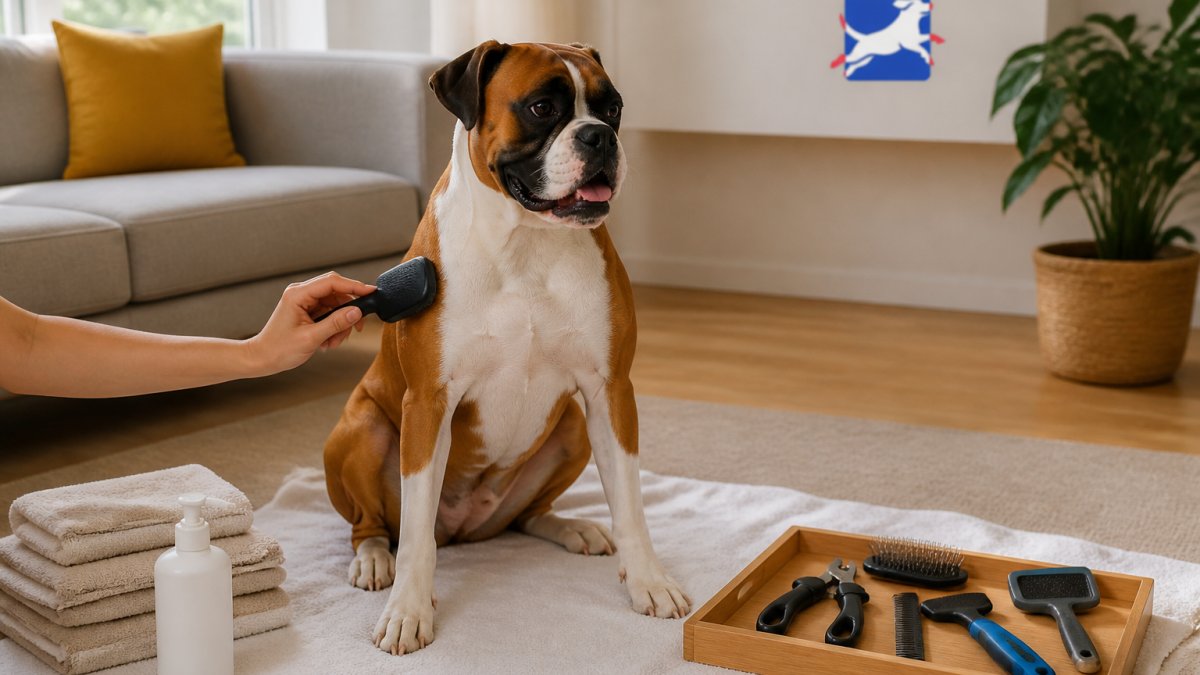
- Brush before bathing. Water tightens mats, so loosen tangles first.
- Bathe with pet-safe shampoo. Rinse thoroughly; leftover soap irritates skin.
- Dry the coat fully. Damp undercoat can trap moisture against the skin.
- Trim nails in small passes. Reward calm behavior between each paw.
- Check ears, eyes, and paw pads. Clean ears with a vet-approved cleaner only.
- Reward and rest. End on a positive note so the next session starts easier.
Keep sessions short, especially at first. Ten calm minutes beats a forty-minute battle, and your dog will associate grooming with treats instead of tension.
Caring for Your Dog Grooming Tools
Clean tools after every few sessions. Dirty tools spread skin issues and dull faster. Pull loose hair out of brush bristles, wash combs and clippers in warm soapy water, and dry everything completely before storing it.
Cleaning, Disinfecting, and Replacement Intervals
- Brushes and combs: remove hair after each use. Wash with warm soapy water weekly, and disinfect monthly with a pet-safe disinfectant or a diluted vinegar solution. Replace slicker brushes when pins are bent or missing, typically every 6-12 months with regular use.
- Nail clippers: wipe blades with a cloth after each use. Dull blades crush the nail instead of cutting it. Replace clippers when they require pressure or leave ragged edges, often every 6-12 months for home use. Sharpen or replace blades rather than forcing a dull tool.
- Clippers: brush out hair from the blade after every use. Oil the blade before and after each session with clipper oil. Remove the blade and clean underneath monthly. Replace blades when they pull or heat up quickly, usually every 3-6 months with regular use.
Storage and Hygiene
Store everything in one caddy so grooming does not begin with a hunt through drawers. Keep tools dry; moisture on blades causes rust. If your dog has a skin infection, disinfect tools after each use and avoid sharing tools with other pets until the infection clears. A five-minute cleanup after each session keeps your kit working for years.
Dull clippers and matted brushes cause more grooming injuries than inexperience does. Maintain the tools and the rest gets easier.
Common Beginner Grooming Mistakes and When to Call a Groomer
The most common beginner mistakes are cutting mats with scissors, trimming nails too short, bathing too often, and pushing a nervous dog past its limit.
The AVMA's pet care resources recommend professional grooming for breeds with demanding coats and for any dog showing skin irritation or unusual shedding.
Grooming a dog at home comes down to the right tools, a steady routine, and knowing when to hand off.
Frequently Asked Questions
What are the essential tools for grooming dogs?
A starter kit covers eight basics: a slicker brush, a metal grooming comb, a pin or bristle brush for finishing, nail clippers or a grinder, pet-safe shampoo, ear cleaner, a toothbrush and dog toothpaste, and grooming wipes. Add an undercoat rake or dematting tool only if your dog has a double coat or long hair. You do not need clippers or shears on day one. Start with the brushes and nail care, learn how your dog tolerates each step, then expand.
What is the best dog grooming kit for beginners?
The best dog grooming kit for beginners is one matched to your dog's coat, not the biggest box on the shelf. A short-coated dog needs a rubber curry brush and a bristle brush. A long or double-coated dog needs a slicker brush, a metal comb, and an undercoat rake. Build the kit in three tiers: brushes and a comb first, nail care second, shampoo and hygiene items third. Shop and Bark stocks these categories individually, so you can skip tools your dog will never need.
Which brush should I use for my dog's coat type?
Match the brush to the coat. Short, smooth coats do well with a rubber curry brush or bristle brush. Long coats need a slicker brush plus a metal comb to check for tangles. Double coats need an undercoat rake to pull loose fur from the dense layer. Curly coats such as poodles need a slicker brush and comb used daily to prevent mats. When in doubt, brush with a slicker first, then run a metal comb through to confirm you reached the skin.
Do beginners need dog grooming clippers?
Most beginners do not need clippers right away. Clippers are useful for sanitary trims and paw pads, but a wrong blade angle or an impatient moment can nick skin. Learn brushing, combing, and nail trimming first. If your dog's coat grows continuously, a cordless clipper with a blade attachment sized for your dog's coat is a reasonable second purchase. Until then, a professional groomer can handle full clips while you build confidence with the handheld tools.
How often should I brush my dog at home?
Brushing frequency depends on coat length. Short coats typically need one brushing a week. Medium coats do well with two to three sessions. Long, curly, and double coats usually need daily brushing to stop tangles and mats from forming. Nails are usually trimmed every three to four weeks, and baths every four to eight weeks unless your dog gets dirty sooner. Keep sessions short, reward calm behavior, and stop before your dog gets frustrated.
What should I do if my dog is nervous about grooming?
Start with touch desensitization away from tools: handle paws, ears, and tail during calm moments, then pair each with a treat. Introduce one tool at a time, let your dog sniff it, and do a few seconds of brushing before stopping. Keep early sessions under five minutes and end on a positive note. A non-slip mat and a quiet room help. If your dog panics or snaps, pause and consult your veterinarian or a professional groomer before pushing further.
What are common mistakes made during dog grooming?
The most common beginner mistakes are brushing only the topcoat, cutting mats out with scissors, trimming nails too close to the quick, and using human shampoo on dog skin. Others include skipping the comb check after brushing, letting a nervous dog dictate a rushed session, and forgetting to clean tools between uses. Slow down, work in small sections, and keep a styptic powder nearby for nail accidents. If a mat is tight against the skin, leave it to a professional groomer.
How do I keep grooming tools clean and safe?
Rinse brushes and combs after each session to remove loose fur, then wash them monthly with warm water and mild soap. Let them air-dry bristle-side down. Wipe clipper blades with a blade-cleaning solution and oil them per the manufacturer's instructions. Store everything dry in a closed container so bacteria and dust stay off the teeth. Replace slicker brush pads when the pins bend, and sharpen or replace shears when they start pulling hair instead of cutting it.