 listicle
Best Dog Crates for Puppy Training: 2026 Guide
Table of Contents
- Quick Comparison Table
- How to Choose the Right Crate for Your Puppy
- Top Dog Crates for Puppy Training
- 1. MidWest iCrate Fold & Carry: Budget-Friendly Training Essential
- 2. Diggs Evolv Dog Crate: Grows With Your Puppy
- 3. Diggs Revol Dog Crate: Premium Aesthetics and Safety
- 4. KindTail PAWD: Modern Design for Small to Medium Breeds
- 5. Ruffland Kennels: Durability for Active Training
- 6. Gunner G1 Kennel: Maximum Safety and Protection
- 7. Impact Dog Crates: Escape-Proof Security
- 8. Fable Pets Crate: Furniture-Style Den Alternative
- 9. Noah & Paw Collapsible Dog Crate: Reliable Wire Option
- How to Crate Train a Puppy: Building Positive Associations
- Crate Training Schedule for Puppies: Age-Based Timeline
- Essential Features for Puppy Crate Training Success
- Which Crate Should You Pick?
- Frequently Asked Questions
Last Updated: September 30, 2026
Quick Comparison Table
| Crate Type | Best For | Key Advantage | Main Drawback |
|---|---|---|---|
| Wire (collapsible) | Budget-conscious trainers | Affordable, portable, good ventilation | Can be noisy |
| Plastic (hard-sided) | Heavy chewers, travel | Durable, den-like feel, easy to clean | Heavier, less portable |
| Soft-sided | Frequent travelers | Lightweight, collapsible, portable | Not suitable for destructive puppies |
| Furniture-style | Design-conscious owners | Blends with home decor, dual-purpose | Not portable, premium pricing |
| Expandable | Growing puppies | Grows with your dog, adjustable space | Heavier than basic wire |
How to Choose the Right Crate for Your Puppy
Choosing the right crate is crucial during puppy training. The best dog crates for puppy training balance safety, comfort, and your lifestyle needs.
A properly sized crate encourages natural den-like behavior, making housebreaking easier and giving your puppy a sense of security. Size and material choice directly affect how quickly your puppy accepts it.
Puppy Crate Size Guide
The most common mistake is buying a crate that's too large. Your puppy should stand, turn around, and lie down comfortably, but not have room to potty in one corner and sleep in another.
Measure your puppy from nose to tail base and add 2-4 inches for length. For height, measure to the top of their head and add 2-3 inches.
Wire vs. Plastic vs. Soft-Sided Crates
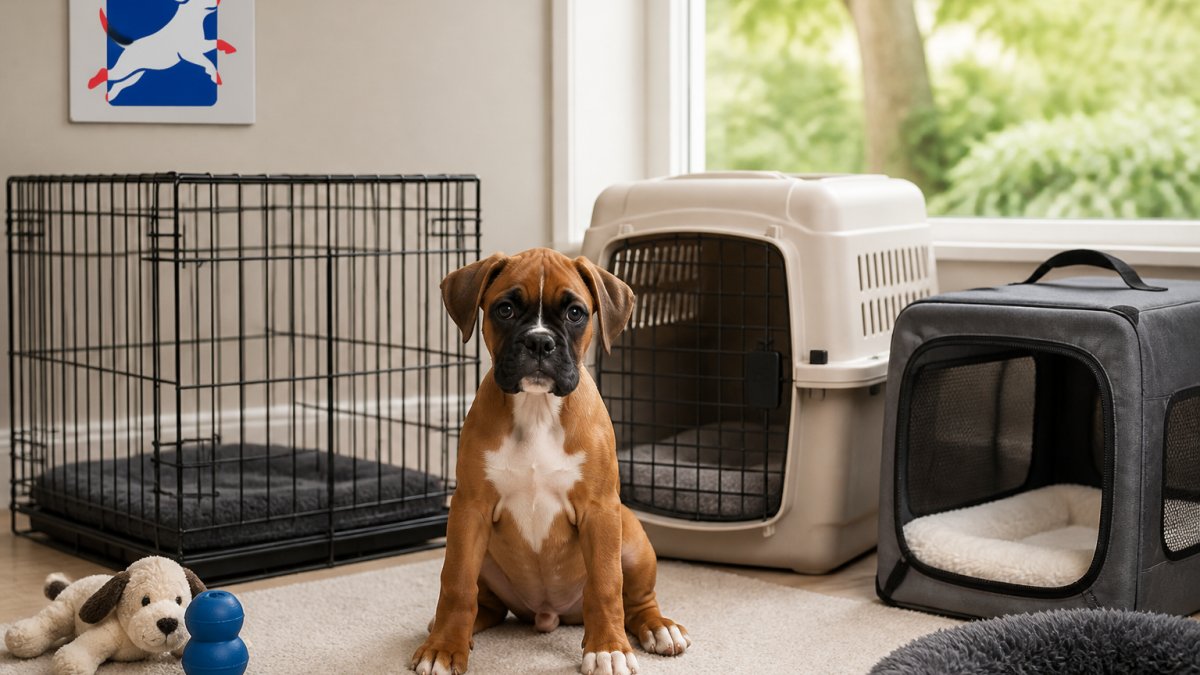
Wire crates offer visibility and ventilation with collapsible storage, but create noise and lack the den-like feel some puppies need.
Top Dog Crates for Puppy Training
1. MidWest iCrate Fold & Carry: Budget-Friendly Training Essential
The MidWest iCrate is the most practical budget entry point. This collapsible wire crate includes a removable divider panel for growth adjustment. The double-door design fits tight spaces, slide-bolt latches secure most puppies, and fold-and-carry construction stores flat.
Pros:
- Highly affordable entry point
- Divider panel included for growth stages
- Collapsible for storage and transport
- Double-door flexibility
Cons:
- Wire noise can startle puppies
- Open design increases anxiety for some dogs
- Not suitable for heavy chewers
2. Diggs Evolv Dog Crate: Grows With Your Puppy
The Diggs Evolv solves outgrowth with a modular panel system that grows through multiple life stages. Multiple door configurations customize placement, and durable wire construction with included divider manages growth phases.
Pros:
- Expandable design eliminates need for multiple crates
- Modular flexibility for different home layouts
- Durable wire construction
- Multiple door options
Cons:
- Heavier than standard wire crates
- More complex setup and configuration
- Wire noise remains an issue
3. Diggs Revol Dog Crate: Premium Aesthetics and Safety
The Diggs Revol is premium furniture-style crating with vertical garage-door opening for tight spaces. It collapses efficiently, includes a puppy divider, and looks like furniture rather than a training tool.
Premium pricing reflects aesthetics and permanent placement design.
Pros:
- Superior build quality and aesthetics
- Easy setup and collapse
- Vertical garage-door access
- Includes puppy divider
Cons:
- High price point
- Not practical for frequent relocation
- Premium pricing for design features
4. KindTail PAWD: Modern Design for Small to Medium Breeds
The KindTail PAWD offers design-forward plastic construction with honeycomb ventilation. Easy-to-clean surfaces handle accidents quickly, and lightweight design allows effortless room-to-room movement.
Pros:
- Visually appealing modern design
- Lightweight and portable
- Easy to clean
- Honeycomb ventilation improves airflow
Cons:
- Not suitable for aggressive chewers
- Limited to smaller breeds
- Plastic durability depends on puppy temperament
5. Ruffland Kennels: Durability for Active Training
Ruffland Kennels builds one-piece rotomolded plastic for durability. Stackable design helps with multiple puppies, and the easy-to-hose-out design sanitizes quickly without removing components.
This crate doesn't collapse and is heavy, limiting portability.
Pros:
- Extremely easy to clean and sanitize
- Highly durable one-piece construction
- Stackable for multiple puppies
- Solid ventilation design
Cons:
- Does not collapse or fold
- Heavy and difficult to move
- Not portable for travel
6. Gunner G1 Kennel: Maximum Safety and Protection
The Gunner G1 offers extreme durability with a 5-star crash test rating and double-walled construction. The lockable paddle-latch door secures escape artists, and integrated drainage handles accidents.
Pros:
- Industry-leading 5-star crash test rating
- Double-walled construction for impact protection
- Integrated drainage system
- Lockable door with paddle latch
Cons:
- Heavy and not collapsible
- High price point
- Designed for vehicles more than home training
7. Impact Dog Crates: Escape-Proof Security
Impact Dog Crates builds professional-grade aluminum for escape artists. High-grade aluminum is stronger than plastic yet lighter, with collapsible design balancing portability and security. The slam-latch door system is escape-proof.
Pros:
- Escape-proof slam-latch design
- Lightweight aluminum construction
- Collapsible for storage
- Professional-grade durability
Cons:
- Expensive premium pricing
- Overkill for typical puppies
- Specialized construction adds complexity
8. Fable Pets Crate: Furniture-Style Den Alternative
Fable Pets creates furniture-grade crates functioning as side tables or room accents. Dual-purpose functionality appeals to owners wanting containment without visible training tools, and solid construction provides den-like feel.
Not portable; designed for permanent placement.
Pros:
- Aesthetic appeal as functional furniture
- Provides den-like security
- Dual-purpose functionality
- Easy-to-clean tray
Cons:
- Not portable or collapsible
- High furniture-grade pricing
- Designed for permanent placement
9. Noah & Paw Collapsible Dog Crate: Reliable Wire Option
Noah & Paw delivers straightforward, functional wire crating without premium pricing. The collapsible frame stores flat, durable mesh handles typical puppies, and multiple sizes fit different breeds. It's the practical middle ground between expandable designs and plastic.
Pros:
- Simple, reliable design
- Good value for basic training
- Collapsible for storage
- Multiple size options
Cons:
- Standard wire design lacks premium features
- No specialized features for problem behaviors
- Limited aesthetic appeal
How to Crate Train a Puppy: Building Positive Associations
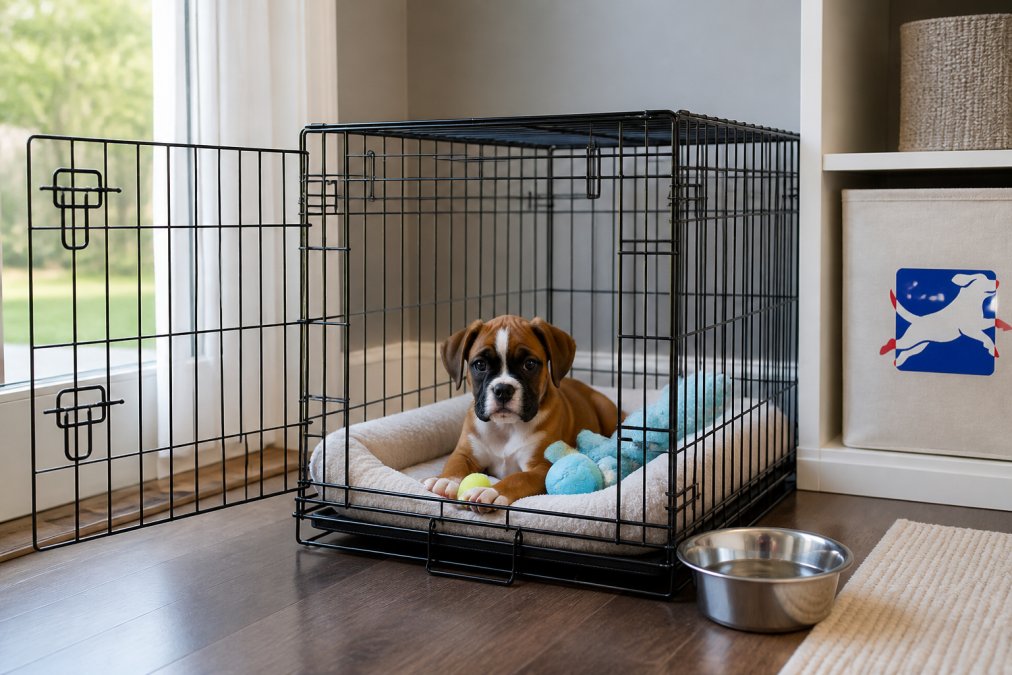
Crate Anxiety and Desensitization Techniques
Some puppies develop crate anxiety from separation anxiety rather than the crate itself.
Crate Training Schedule for Puppies: Age-Based Timeline
Puppies have limited bladder control affecting crate training schedules. A 10-week-old holds bladder 3-4 hours; an 8-week-old manages 2-3 hours.
Essential Features for Puppy Crate Training Success
Divider panels adjust space for growing puppies without buying multiple crates. Double-door access provides layout flexibility. Easy-to-clean surfaces speed cleanup during intensive training. Secure locking mechanisms prevent accidental opening. Adequate ventilation prevents heat buildup. Portability features depend on lifestyle, collapsible designs suit frequent movement; fixed designs work for permanent placement. Washable pans or liners handle accidents.
Which Crate Should You Pick?
Choose wire crates for budget-conscious training with maximum visibility. The MidWest iCrate or Noah & Paw Collapsible offer reliable options.
Frequently Asked Questions
What is the best age to start crate training a puppy?
Most puppies are ready for crate training between 8 and 12 weeks old. At this age, puppies have better bladder control and can begin to understand boundaries. Starting early helps establish the crate as a safe space rather than a punishment. Puppies younger than 8 weeks may struggle with extended crate time due to frequent bathroom needs. Consistency during these early weeks builds a foundation for positive associations with the crate throughout your puppy's life.
How do I choose the right size crate for a growing puppy?
Select a crate that allows your puppy to stand, turn around, and lie down comfortably without extra space. Too much room encourages accidents in one corner while the puppy sleeps in another. Use a divider panel to adjust the space as your puppy grows, or choose an expandable crate design. Measure your puppy's adult size estimate based on breed and current growth rate. Most crate manufacturers provide sizing charts by breed, making it easier to select the appropriate dimensions for your specific puppy.
Are wire crates or plastic crates better for puppy training?
Both wire and plastic crates work well for puppy training, but each has distinct advantages. Wire crates offer better visibility and airflow, making them ideal for training since puppies can see their surroundings. They're also easier to clean and typically more affordable. Plastic crates provide a den-like feel that many puppies find comforting and are better for travel since they're airline compliant. Choose based on your puppy's temperament: anxious puppies often prefer the enclosed security of plastic, while confident puppies may respond better to open wire designs.
How long can a puppy stay in a crate during the day?
A general rule is one hour per month of age, plus one. An 8-week-old puppy can stay in a crate for approximately 2-3 hours, while a 4-month-old puppy can manage 4-5 hours. Never leave a puppy crated for extended periods without bathroom breaks, as this can cause accidents and damage housebreaking progress. Adult dogs can typically stay crated for 8 hours, but puppies require more frequent breaks. Combine crate time with a consistent potty schedule to support successful housebreaking and prevent separation anxiety.
What features should I look for in a puppy crate for training?
Look for a secure locking mechanism that prevents escape, a removable floor tray for easy cleaning after accidents, and a divider panel to adjust space as your puppy grows. Double-door access provides flexibility in placement and training. Ventilation is essential for comfort and airflow. Choose non-toxic, chew-resistant materials since puppies explore with their teeth. Portability matters if you plan to move the crate between rooms or travel. A den-like feel created by crate covers or design helps puppies feel safe and reduces crate anxiety during training.