 listicle
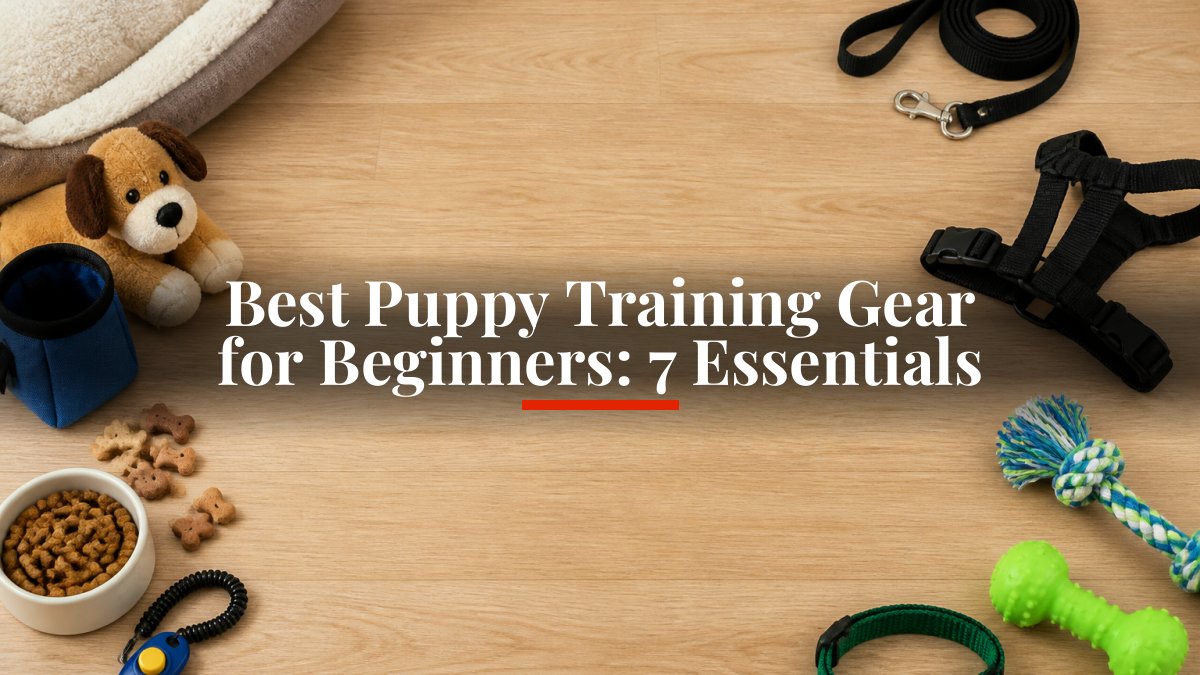
Best Puppy Training Gear for Beginners: 7 Essentials
Table of Contents
- Why the Right Puppy Training Gear Matters
- 1. High-Value Puppy Training Treats
- 2. Clicker and Treat Pouch for Reward-Based Training
- 3. Puppy Leash and Harness for Control and Safety
- 4. Puppy Crate and Playpen for Confinement Training
- 5. Interactive Toys and Enrichment Tools
- 6. Essential Puppy Training Tools You Might Overlook
- 7. Building Your Beginner Starter Kit
- Frequently Asked Questions
Last Updated: October 7, 2026
Why the Right Puppy Training Gear Matters
Starting with the right puppy training gear sets your new dog up for success. When you have the proper tools, training becomes clearer for your puppy and less frustrating for you.
The most common mistake we see? Owners buy too much too soon, then realize half of it doesn't work for their puppy's age or size.
1. High-Value Puppy Training Treats
Treats are the foundation of reward-based training. Without them, your puppy has no reason to listen. The right treats make training sessions exciting and keep your puppy focused on you instead of distractions.
What Makes a Treat High-Value
High-value treats are small, soft, and smell strong. Your puppy should want them more than anything else in the room.
Size matters more than you'd think. Training treats should be pea-sized or smaller. Your puppy will eat dozens in a single session, so small pieces prevent overfeeding and keep training sessions short enough to hold attention.
Size and Portion Control
A single training session might use 20-30 treats. Over a week, that adds up. Buy treats in small quantities first, you don't know which flavor your puppy will go crazy for. Once you find a winner, stock up.
Soft treats work best because puppies eat them quickly. Hard biscuits slow down training and can distract your puppy mid-session. Look for treats that break apart easily so you can make them even smaller if needed.
2. Clicker and Treat Pouch for Reward-Based Training
A clicker and treat pouch are the two most underrated pieces of puppy training gear. Together, they speed up learning and make training portable.
How Marker Training Works
A clicker marks the exact moment your puppy does something right. The click tells your puppy, "That's it, treat coming." This precision matters. Your puppy learns faster when the reward happens immediately after the correct behavior.
Without a clicker, you rely on saying "good" or "yes." Your puppy hears these words all day in normal conversation, so they lose meaning. A clicker is a unique sound that only means one thing: reward is coming.
Choosing the Right Treat Pouch
A treat pouch keeps your hands free and your treats accessible. You'll be holding a leash, a clicker, and your puppy's attention, a pouch lets you grab a treat without fumbling. Look for pouches with a secure closure so treats don't spill during training.
Waterproof pouches are worth the extra cost. Puppies train in rain, mud, and grass. A good pouch keeps treats fresh and your hands dry.
3. Puppy Leash and Harness for Control and Safety
A leash and harness are your safety tools. They keep your puppy from bolting into traffic, running away, or pulling you off balance. The right fit matters because puppies grow fast.
Leash Length and Material
A fixed-length leash is better than a retractable one for training. Fixed leashes give you consistent control.
A 4-6 foot leash is standard for puppy training. Long enough to let your puppy explore but short enough for you to keep control.
Material matters. Nylon leashes are durable and easy to clean. Leather leashes are softer on your hands but need more care. For puppies, nylon wins on practicality.
Harness vs. Collar Fit
A harness spreads pressure across your puppy's chest and back. A collar concentrates pressure on the neck.
Your puppy will grow. A harness that fits now will be too small in 2-3 months. Some harnesses adjust as your puppy grows. Others you'll outgrow.
Fit is critical. A harness should be snug enough that you can't slip two fingers under the straps, but loose enough that it doesn't dig in.
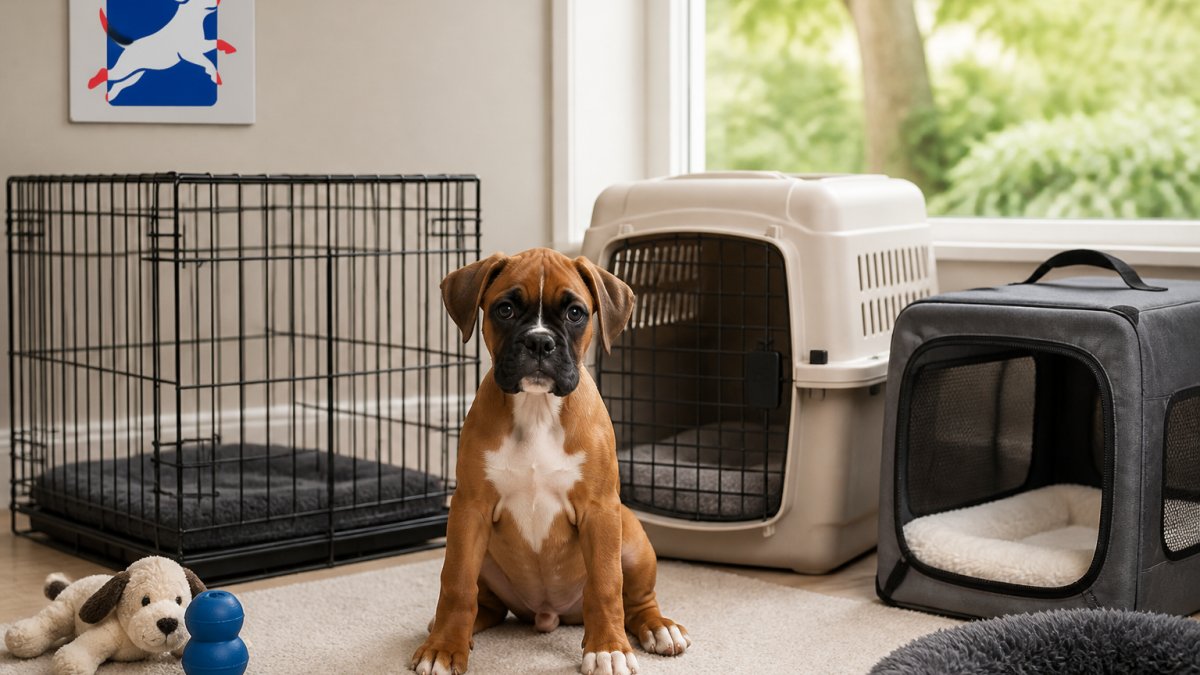
4. Puppy Crate and Playpen for Confinement Training
A crate and playpen serve different purposes. Both teach your puppy to stay safe and calm when you can't watch them.
Sizing Your Crate for Growth
A crate should be just large enough for your puppy to stand, turn around, and lie down.
Most puppies grow to their adult size by 12 months. Buying a crate that fits your adult dog and using a divider panel for now saves money.
Crate training works because dogs naturally avoid soiling their sleeping area. A properly sized crate teaches your puppy bladder control and creates a safe space where they can calm down.
When to Use a Playpen vs. a Crate
A playpen gives your puppy more space than a crate but still keeps them contained. Use a playpen when you need to step away for 30 minutes to an hour. Use a crate for longer periods or when you're sleeping.
A playpen is great for potty training because you can put puppy pads in one corner. Your puppy learns that one area is for bathroom breaks. A crate doesn't allow that flexibility.
5. Interactive Toys and Enrichment Tools
Bored puppies become destructive puppies. The right toys keep your puppy's mind and mouth busy, which reduces chewing on furniture and shoes.
Treat-Dispensing Toys
A treat-dispensing toy makes your puppy work for rewards. These toys slow down eating and keep puppies entertained for 20-30 minutes. Puppies love them because they get treats, and you love them because they give you quiet time.
Stuff them with high-value treats or wet food. Freeze them for longer-lasting entertainment. A frozen treat-dispensing toy can keep a puppy busy for an hour.
Durable Chew Toys
Puppies teethe. Chew toys redirect that instinct away from your hands, furniture, and shoes. Look for toys made from rubber or nylon that can withstand aggressive chewing.
Soft plush toys are fun but get destroyed fast. Save those for supervised play. For unsupervised chewing, buy toys designed to be tough. They cost more upfront but last longer and keep your puppy safer.
6. Essential Puppy Training Tools You Might Overlook
Beyond the basics, a few tools make training smoother and solve specific problems.
Long Lines for Recall Practice
A long line is a 15-30 foot rope attached to your puppy's collar or harness. It lets your puppy explore while you keep control. Long lines are essential for teaching recall, the ability to come when called.
Start recall training in a fenced yard with a long line. If your puppy ignores you, the line lets you gently guide them back.
Potty-Training Pads and Supplies
Puppy pads are temporary. Use them for the first 2-3 weeks while your puppy learns where the bathroom is. Place them in a consistent spot, reward your puppy for using them, then gradually move them closer to the door.
Paper towels and enzymatic cleaner matter more than pads. Accidents happen. An enzymatic cleaner breaks down the scent so your puppy doesn't keep using the same spot.
Training Collar Options
A flat collar is fine for most puppies. It holds ID tags and a leash. Skip choke chains, prong collars, and shock collars, they hurt and teach fear, not obedience. Positive reinforcement works faster and builds a better relationship with your puppy.
A training collar is different from a choke chain. Training collars are flat and designed to fit properly without choking. They're safe for young puppies and work well with positive reward-based methods.
7. Building Your Beginner Starter Kit
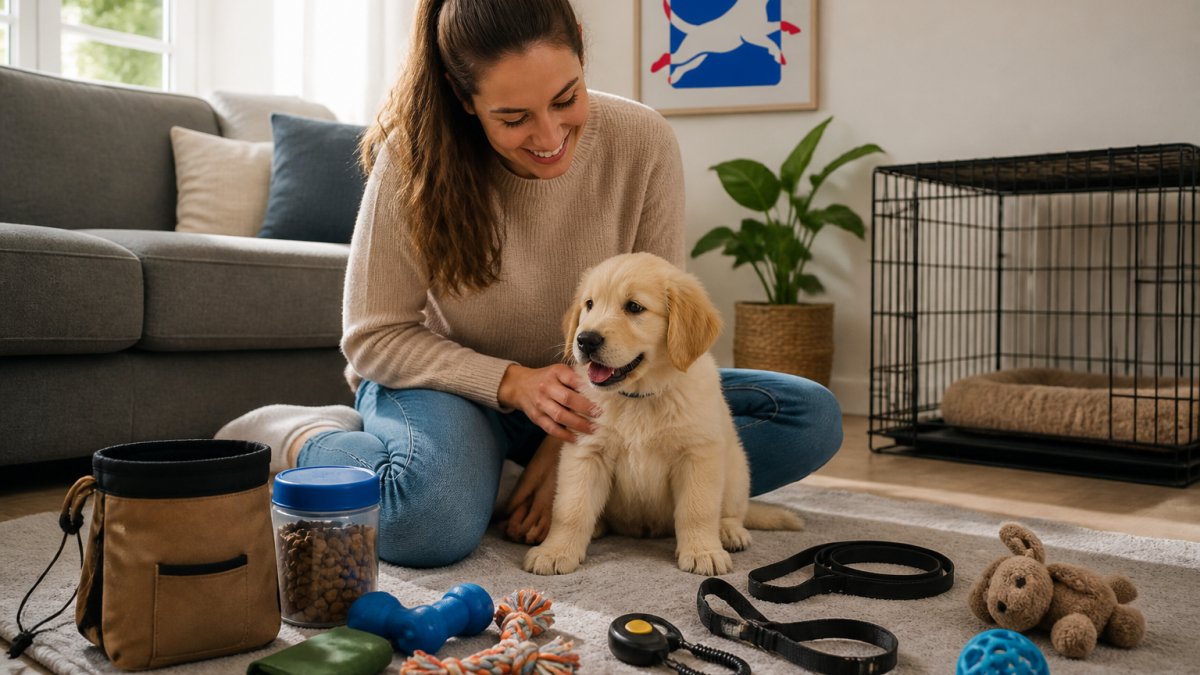
Now that you know what each tool does, here's how to prioritize and build your kit without overspending.
Priority Order for First-Time Owners
Week 1 (must-haves):
- High-value treats (small, soft)
- Puppy leash and harness (correct size)
- Crate (sized for your puppy's expected adult size)
- Puppy pads or outdoor potty supplies
Week 2-3 (add these): 5. Clicker and treat pouch 6. Treat-dispensing toy 7. Durable chew toys
Month 2+ (expand as needed): 8. Playpen (if you want more flexibility than a crate) 9. Long line (for recall practice in open spaces) 10. Additional enrichment toys
| Item | Why It Matters First | When You Can Add It |
|---|---|---|
| High-value treats | Reward-based training won't work without them | Week 1 |
| Leash and harness | Safety during outdoor potty breaks | Week 1 |
| Crate | Housebreaking and safe confinement | Week 1 |
| Clicker | Speeds up learning and precision | Week 2-3 |
| Treat pouch | Keeps training efficient and hands free | Week 2-3 |
| Enrichment toys | Prevents destructive behavior | Week 2-3 |
| Playpen | Adds flexibility beyond crate confinement | Month 2 |
| Long line | Essential for recall training | Month 2 |
Safety and Sizing Considerations
Your puppy grows fast. A collar that fits today will be tight in 4 weeks. Check fit weekly, you should fit two fingers under any collar or harness strap.
Watch for signs of discomfort. If your puppy resists wearing a harness or collar, it might be too tight or rubbing.
Avoid gear marketed as "cute" if it sacrifices function. A novelty collar that looks great but doesn't adjust properly will frustrate you both.
Budget-Friendly Approach
You don't need the most expensive gear. A basic clicker costs $2-5.
Crates and playpens are bigger investments. Buy once, buy right.
Shop and Bark makes it easy to find affordable, high-quality products for your puppy.
Building the right puppy training setup takes time, but it's worth the effort.
The gear you choose matters less than consistency.
Shop and Bark makes it easy to find everything your puppy needs in one place.
Frequently Asked Questions
What training gear does a beginner puppy owner need?
Start with the essentials: high-value treats, a clicker for marker training, a properly fitted leash and collar, a crate sized for your puppy's current and adult size, a playpen for safe confinement, and interactive toys. Add a treat pouch for easy access during training sessions. These core items support positive reinforcement and control while your puppy learns. Prioritize based on your immediate training goals, then expand as your puppy grows.
Are treats necessary for puppy training?
Yes, high-value treats are one of the most effective tools for reward-based training. Puppies respond strongly to food motivation, making treats the fastest way to mark and reinforce good behavior. Use small, soft treats that your puppy can eat quickly so you can deliver the reward immediately after the desired action. This timing is critical for puppies to connect their behavior with the reward.
Do puppies need a crate or a playpen for training?
Both serve different purposes. A crate teaches your puppy to settle in a small, secure space and supports potty-training by encouraging bladder control. A playpen gives your puppy more room to move while keeping them safely contained during unsupervised time. Many beginners use a crate for sleeping and training, then add a playpen as the puppy grows. Your choice depends on your living space and training timeline.
What kind of leash and collar should I use for a puppy?
Use a lightweight, fixed-length leash (4-6 feet) for training control. Avoid retractable leashes, which teach puppies to pull. Choose a flat collar or harness that fits snugly without pinching. A harness is often better for puppies because it distributes pressure evenly and reduces neck strain. Ensure you can fit one finger between the collar and your puppy's neck. Check the fit weekly as your puppy grows.
How do I know if my puppy training gear is the right size?
Measure your puppy before purchasing. For collars, you should fit one finger between the collar and neck. For crates, your puppy should be able to stand, turn around, and lie down comfortably. Harnesses should not restrict movement or pinch. Since puppies grow quickly, consider adjustable gear or plan to replace items as your puppy reaches adult size. Check fit weekly during the first year.