 listicle
Best Puppy Training Supplies for Beginners: 2026 Guide
Table of Contents
- Essential Puppy Training Supplies for Beginners
- Best Dog Playpens for Indoor Use
- Puppy Training Treats for Beginners
- How to Use a Clicker for Dog Training
- Crate Training Essentials and Potty Training Supplies
- Budget vs. Premium Puppy Training Supplies
- Troubleshooting Common Puppy Training Hurdles
- Frequently Asked Questions
Last Updated: September 21, 2026
Essential Puppy Training Supplies for Beginners
Bringing home a new puppy is exciting, but the first few weeks set the tone. The right puppy training supplies make that adjustment smoother; the wrong ones collect dust. This guide from Shop and Bark covers the gear that earns its place, from day one through the first several months.
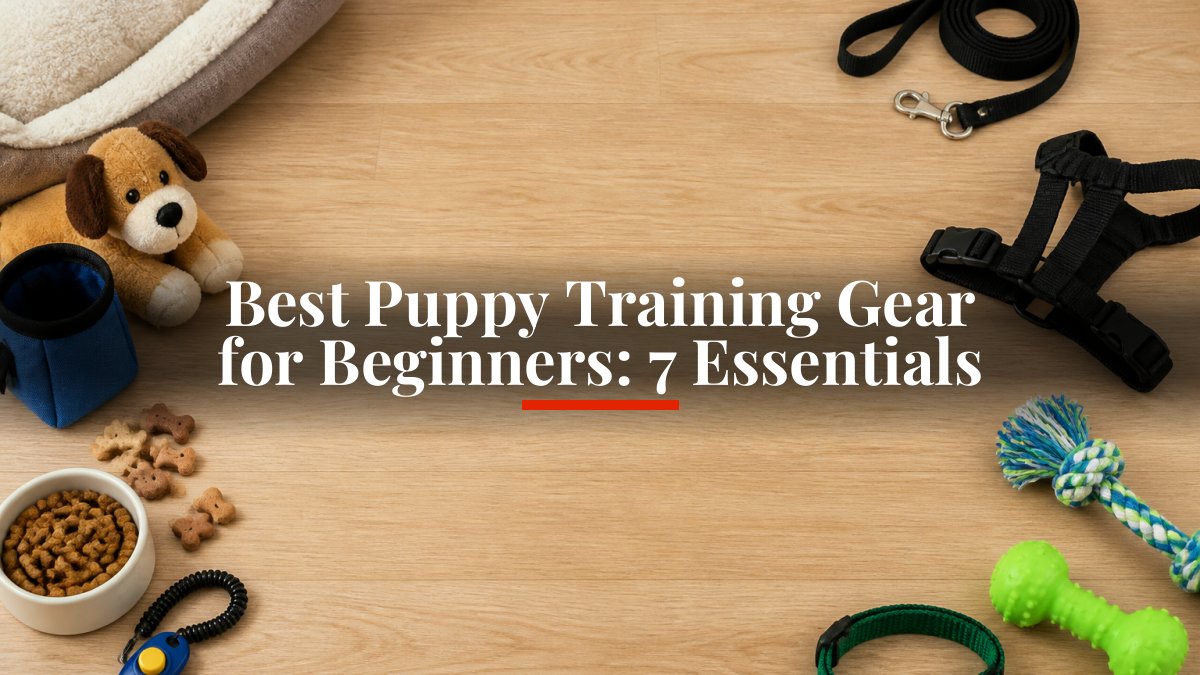
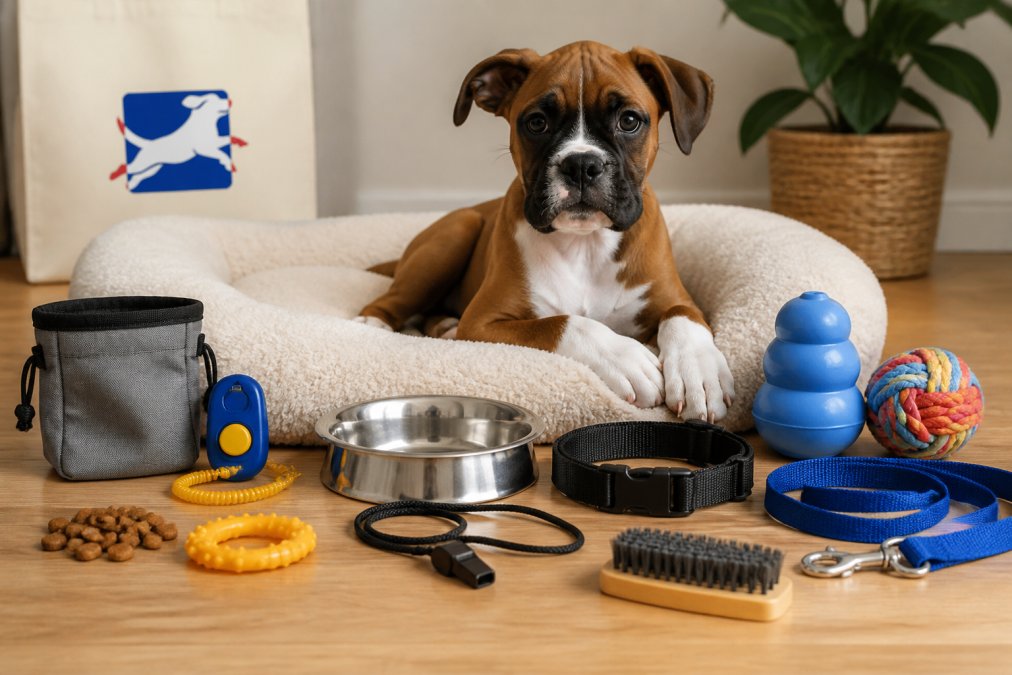
Start with the basics: a crate, an exercise pen, a treat pouch, high-value treats, a clicker, and a few durable toys. Those six items cover house training, crate training, leash manners, and mental enrichment. Everything else is a nice-to-have.
Most new owners buy a mountain of gear before the puppy comes home, then find half of it doesn't fit their routine or their dog's temperament. Buy the essentials first, then add specialty items once you know how your puppy learns and what motivates them.
The supplies below are grouped by the job they do, so you can build a starter kit that matches your puppy's age, size, and stage of development.
Best Dog Playpens for Indoor Use
An indoor playpen gives your puppy a safe zone while you cook, work, or step out. It also speeds up potty training, since you can keep the puppy in sight and whisk them outside the moment they start circling.
Sizing that actually works. A pen should give your puppy roughly 8 to 10 square feet at eight weeks, expanding to about 16 square feet by four months. Height matters more than footprint: a pen under 24 inches tall won't hold a determined puppy past ten weeks. Choose panels at least 30 inches tall for a climber, 36 inches for a large-breed puppy who will grow into a jumper.
Materials and trade-offs.
- Wire pens are the most common and the most affordable. They're see-through, which reduces isolation whining, but the bars can trap a tiny paw if the spacing is wider than 1.5 inches. Check the gap before you buy.
- Plastic panel pens wipe clean easily and come in bright colors, but they're lighter and a strong puppy can push them across a hard floor. Look for non-slip feet or suction cups.
- Fabric pens are portable and great for travel, but they offer no chew resistance. A teething puppy can shred a fabric panel in an afternoon.
Safety and ergonomics. A pen with a raised floor lip or mesh top can catch a collar tag and create a strangulation risk, so remove your puppy's collar before pen time or use a breakaway collar. Check hinge points too: cheap pens have exposed bolts that can snag a dewclaw. Run your hand along every joint before putting a puppy inside.
Setup that prevents whining. Place the pen where the family actually spends time, the kitchen or living room, near the action but not in the middle of it. A puppy isolated in a back bedroom will whine, and that whining drives owners to give up on pens entirely. Set the pen on a hard surface rather than carpet during the first month; enzyme cleaner works far better on tile or vinyl than on upholstery.
Budget vs. premium. A basic wire pen runs $30 to $60 and does the job for most puppies.
Puppy Training Treats for Beginners
Training treats are your puppy's paycheck, and size matters more than flavor. A treat should be small enough to swallow in one bite and low enough in calories that a dozen in a session won't wreck dinner, no larger than a pea, and no more than 10 percent of daily calories from treats.
Build a two-tier system.
- Everyday tier: small, soft, low-calorie treats for easy repetitions in the kitchen or living room. These are your workhorse rewards.
- High-value tier: soft, smelly, premium treats for recall, new environments, and distractions. These are your emergency currency.
What to look for on the label.
- Soft texture beats crunchy every time. A puppy swallows a soft treat in one bite and gets back to training; crunchy biscuits slow the session down.
- Single protein sources are easier on sensitive stomachs. If your puppy has loose stools after training, the treat is often the culprit.
- Calorie density matters. Ten 5-calorie treats is 50 calories; ten 20-calorie treats is 200, which is a meal for a small puppy.
Budget vs. premium.
- Budget: plain cooked chicken, string cheese cut into pea-sized pieces, or freeze-dried liver. These cost a few dollars and outperform most commercial treats.
- Mid-range: small soft training treats from brands like Shameless Pets, which use upcycled ingredients and come in resealable pouches. The tradeoff is a narrower flavor range than mass-market brands.
- Premium: freeze-dried raw treats and single-ingredient jerky. These are the highest-value rewards and the most expensive per ounce. Save them for recall and vet visits.
How to Use a Clicker for Dog Training
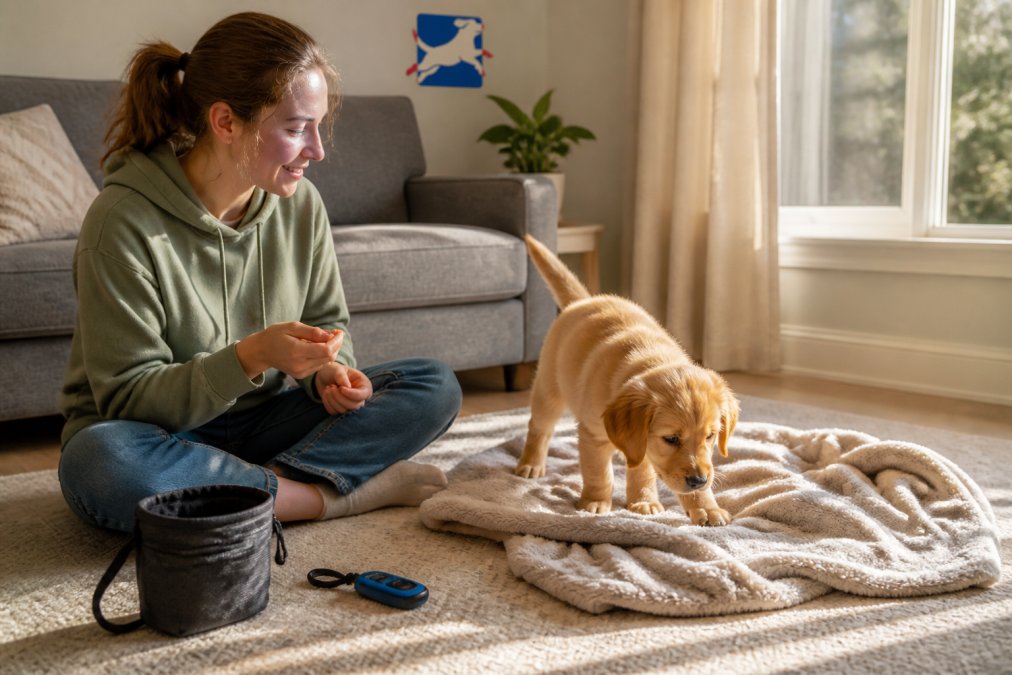
Clicker training is a marker-based method where a distinct sound marks the exact moment your puppy does the right thing, followed immediately by a reward. The click doesn't teach the behavior. It tells the puppy which behavior earned the treat.
Here's how to start:
- Charge the clicker. Click, then treat. Repeat ten times. No commands yet.
- Mark one behavior. Wait for your puppy to sit naturally, click the instant their rear hits the floor, then treat.
- Add a verbal cue once the behavior appears reliably. Say "sit" just before the puppy sits, then click and treat.
- Name the behavior last. The cue comes after the action is consistent, not before.
- Keep sessions to two or three minutes. Puppies lose focus fast.
Crate Training Essentials and Potty Training Supplies
A crate is the single most useful piece of puppy management equipment you'll buy. It gives your puppy a den, prevents destructive chewing when you can't supervise, and speeds house training because dogs avoid soiling their sleeping area.
| Supply | Job It Does | When to Use It |
|---|---|---|
| Crate with divider | Den, supervision, house training | From day one |
| Exercise pen | Safe zone, potty training | Day one through month four |
| Enzyme cleaner | Removes urine scent markers | After every accident |
| Puppy pads | Backup for indoor accidents | Until outdoor routine holds |
| Stainless steel bowls | Feeding and water | Daily |
Budget vs. Premium Puppy Training Supplies
You don't need premium gear to raise a well-trained puppy. You need gear that fits properly and gets used daily. That said, a few categories reward spending more, and a few don't.
Troubleshooting Common Puppy Training Hurdles
Most training problems trace back to three causes: sessions that run too long, rewards that aren't rewarding enough, or a puppy who is tired, hungry, or overstimulated.
Frequently Asked Questions
What supplies do I need for a new puppy?
Start with the basics: a crate, an indoor playpen, a leash and harness, high-value training treats, a clicker, and a treat pouch. Add enzyme cleaner for accidents, puzzle toys for mental enrichment, and a training app for structured guidance. Shop and Bark offers all these essentials in one place, with fast shipping via UPS and USPS so you can start training right away.
What is the most important tool for puppy training?
High-value treats are the most important tool because they drive positive reinforcement. Soft, small treats let you reward frequently without overfeeding. Pair them with a clicker or marker word to mark good behavior instantly. Without a strong reward, even the best gear won't hold your puppy's attention during training sessions.
Do I need a clicker for puppy training?
A clicker helps mark exact moments of good behavior, but it's not mandatory. You can use a marker word like 'yes' instead. If you choose a clicker, pair it with treats and keep sessions short.
What kind of treats are best for puppy training?
Soft, small, low-calorie treats work best because you can reward frequently without filling up your puppy. Look for grain-free options if your puppy has sensitivities. Look for options made with upcycled ingredients and sized for repetition. Avoid hard biscuits that take too long to chew, as they slow down your training pace.
Are indoor playpens necessary for puppy training?
An indoor playpen gives your puppy a safe space to play while you supervise, and it helps with potty training by limiting access to the whole house. It's not strictly necessary, but it makes management easier. The best dog playpens for indoor use are sturdy, easy to clean, and tall enough that your puppy can't climb out. Shop and Bark stocks playpens that fit these criteria.
Raising a puppy takes patience, consistency, and gear that fits your actual routine. Shop and Bark carries the essentials, from crates and playpens to treat pouches, training treats, and durable toys, all backed by a customer service team that helps you figure out what you need. Everything ships from the US by UPS and USPS, so your starter kit arrives before the puppy does. Shop Now and build a training setup that grows with your dog.