 blog
Best High Quality Dog Toys 2026
Last Updated: October 25, 2026
Quick Summary
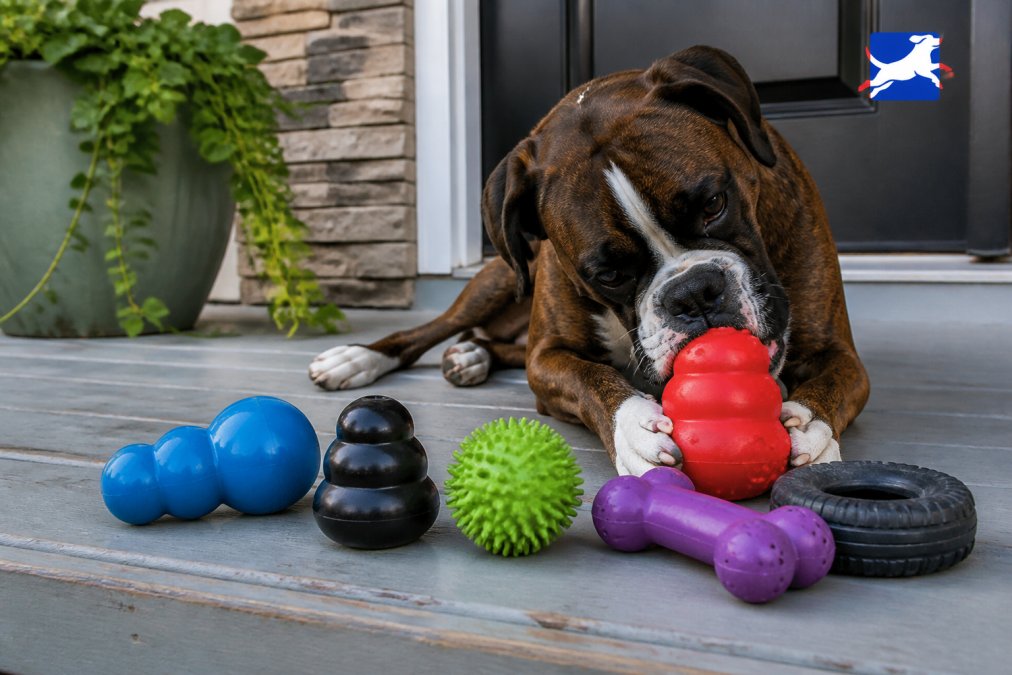
High quality dog toys are built to withstand real chewing, tugging, and play using reinforced rubber, durable fabrics, or tough composites that resist punctures and tears. High quality dog toys last through years of daily play while engaging your dog's mind and satisfying natural instincts, making them worth the investment over cheap alternatives that break quickly.
- Reinforced rubber chew toys last weeks to months for power chewers, while nylon chews last months or longer for moderate chewers.
- Interactive puzzle toys challenge problem-solving skills and can tire a dog as much as a 30-minute walk in just 10 minutes.
- A toy's smallest dimension should be wider than your dog's muzzle to prevent choking hazards.
- Seamless, molded toys without stitching outlast toys held together with thread when facing aggressive chewers.
- Rotate durable chew toys every few days to reduce over-chewing, spot damage easier, and maintain novelty.
Table of Contents
- What Makes High Quality Dog Toys Worth the Investment
- Durable Dog Toys for Aggressive Chewers
- Interactive Dog Toys That Build Mental Engagement
- Best Dog Toys for Puppies and Young Dogs
- Dog Puzzle Toys for Problem-Solving Play
- Choosing the Right Toy Size and Play Style
- Finding Your Dog's Next Favorite Toy
- Frequently Asked Questions
What Makes High Quality Dog Toys Worth the Investment
The difference between a toy your dog destroys in 20 minutes and one that lasts for months comes down to materials, design, and durability.
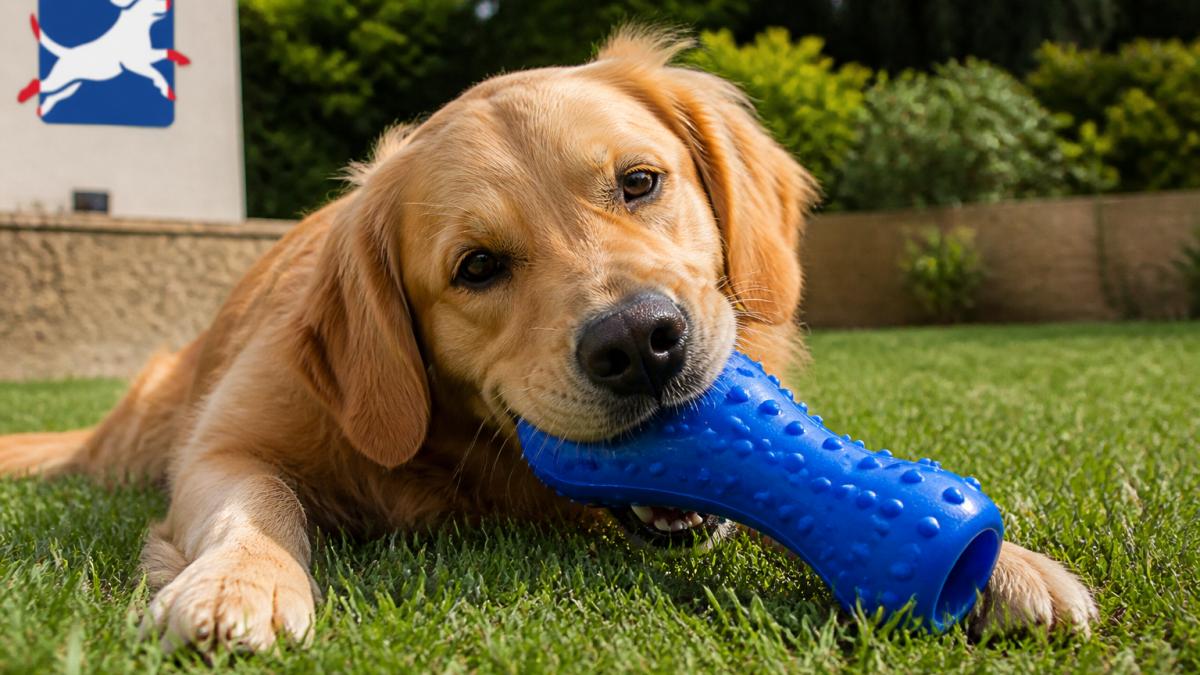
High quality dog toys are built to withstand real chewing, tugging, and play, using reinforced rubber, durable fabrics, or tough composites that resist punctures and tears.
The investment pays for itself: a quality toy lasts through years of daily play, while cheap toys break, splinter, or shed choking hazards.
Durable Dog Toys for Aggressive Chewers
If your dog destroys a standard toy in hours, aggressive chewing requires industrial-grade materials: reinforced rubber, heavy-duty nylon, or composite blends that resist punctures and shredding. You can explore dog squeaky chew toys for aggressive chewers designed to withstand powerful jaws. But material alone isn't enough, construction, geometry, and realistic lifespan expectations matter just as much.
What actually makes a chew toy durable
Durability comes from three factors working together:
- Material hardness and elasticity. Reinforced rubber balances hardness with give: too hard risks cracking teeth, too soft punctures quickly. Nylon is harder and longer-lasting but offers no give, suiting dogs that gnaw rather than chomp. Composite blends aim for a middle ground.
- Seamless construction. Aggressive chewers target weak points first. Molded toys with no seams or stitching outlast anything held together with thread. If a toy has seams, they should be reinforced and flush, not raised.
- Geometry that resists leverage. Toys with irregular, rounded shapes are harder for dogs to pin down and tear. Avoid long, thin protrusions that can be clamped and ripped.
Testing durability at home
You don't need a lab to assess whether a toy is holding up. Introduce it during a supervised session and inspect it after:
- First 15 minutes: Look for puncture marks, tooth imprints, or surface tears. Minor scuffing is normal; deep gouges are a warning sign.
- First week: Check weekly for enlarging holes, exposed inner material, or loosening pieces. A toy that develops a hole within a week is not suited to your dog's chew strength.
- Ongoing: Remove any toy that has sharp edges, loose fragments, or a hole large enough for a tooth to get stuck.
Many power-chewer owners keep a "chew log" noting which toys survived how long, revealing which materials actually hold up for their dog rather than relying on marketing claims.
Realistic lifespan expectations
No durable toy lasts forever with a determined power chewer. Based on owner reports and manufacturer guidance:
- Reinforced rubber chew toys: weeks to months for power chewers, months to years for moderate chewers.
- Nylon chews: months for power chewers, often longer for moderate chewers, but they wear down and should be replaced when significantly reduced in size.
- Composite or mixed-material toys: variable; inspect frequently because failure modes can include both punctures and cracks.
A toy that lasts three months under daily power chewing is performing well. Expecting a year is unrealistic for most aggressive chewers.
Safety and supervision for aggressive chewers
Aggressive chewers risk ingesting fragments or breaking teeth. A few practical rules:
- Supervise new toys until you have seen how your dog interacts with them. Some dogs focus on seams; others try to swallow pieces.
- Size up, not down. A toy that is too small can be swallowed or become a choking hazard. When in doubt, choose the larger size.
- Remove damaged toys immediately. A toy with a hole or crack can trap a tooth or break apart under pressure.
Matching the toy to the chewer
A toy that works for one power chewer may fail for another. Use this as a starting framework:
- Dogs that puncture and tear: prioritize seamless, thick-walled rubber or composite toys with rounded shapes.
- Dogs that gnaw and grind: nylon or harder rubber with textured surfaces can work well, provided the toy is large enough to prevent swallowing.
- Dogs that shred fabric: avoid plush and rope entirely for unsupervised play; if used, treat them as interactive toys only.
Shop and Bark carries durable chew toys for aggressive chewers, a starting point when standard toys aren't cutting it.
Interactive Dog Toys That Build Mental Engagement
Interactive dog toys do more than entertain, they challenge problem-solving skills and keep boredom at bay.
The best interactive toys require your dog to figure something out: slide a puzzle piece, push a lever, or manipulate parts to release treats.
Interactive toys come in several forms: treat-dispensers reward persistence, puzzle feeders require problem-solving, and toys with moving parts or hidden compartments engage through novelty.
Quality matters because cheap interactive toys jam, break, or frustrate dogs when mechanisms fail.
Best Dog Toys for Puppies and Young Dogs
Puppies and young dogs are learning what play means.
For puppies, size is critical, a toy small enough to choke on is a hazard. Varied textures help: rubber for chewing, plush for comfort, rope for tugging.
Young dogs have energy to burn and need toys that support active play: fetch toys, balls, and interactive options.
The best dog toys for puppies and young dogs should be durable enough to survive energetic play but not so tough that they're uncomfortable for soft puppy mouths.
Dog Puzzle Toys for Problem-Solving Play
Puzzle toys combine physical play with mental challenge, keeping dogs engaged longer than passive toys.
Dog puzzle toys feature sliding pieces, hidden compartments, or moving parts your dog manipulates to access treats.
Quality puzzle toys are built so pieces don't jam, mechanisms stay smooth, and the toy survives months of play.
You can find dog puzzle toys designed for different play styles, from simple sliding puzzles to complex multi-step challenges.
Choosing the Right Toy Size and Play Style
Most toy guides tell you to match the toy to your dog's size and play style, then stop. That's true but incomplete. Below is a repeatable framework using jaw strength, mouth geometry, and play-drive observations to narrow the field before you buy.
Step 1: Estimate jaw strength, not just body weight
Body weight is a rough proxy for jaw strength but misses the small yet destructive dog. Combine weight with chewing behavior:
- Light chewer: Mouths toys gently, rarely punctures surfaces, loses interest in hard rubber. Typically under 25 lb or a relaxed adult of any size.
- Moderate chewer: Regularly gnaws, can dent softer rubber over weeks, enjoys textured surfaces. Common in 25-60 lb active adults.
- Power chewer: Punctures standard rubber in minutes, targets seams, shreds fabric. Often 60 lb+ or any dog with a history of destroying "indestructible" toys.
Use the highest tier that matches your dog's actual behavior, not their weight class. A 30-lb power chewer needs the same construction as a 70-lb power chewer.
Step 2: Measure mouth geometry for safe sizing
A toy should be large enough that your dog can't swallow it but small enough to grip and carry. A simple test: the toy's smallest dimension should be wider than your dog's muzzle at its widest point. For most dogs:
- Under 20 lb: toys with a smallest dimension of at least 2 inches.
- 20-50 lb: at least 3 inches.
- 50-90 lb: at least 4 inches.
These are starting points, not absolutes. A long, thin toy can still be a choking hazard even if one dimension meets the threshold. Avoid any toy that can fit entirely inside your dog's mouth without protruding.
Step 3: Match play style to toy function
Observe your dog for a week and note which pattern dominates:
- Chasers and retrievers: Driven by movement. Need balls and fetch toys with high visibility and a bounce that suits your terrain. Scented or treat-holding balls can extend engagement.
- Chewers and gnawers: Seek oral feedback. Need durable rubber or nylon with textured surfaces. Avoid plush and thin rope, which reward shredding.
- Tuggers and shakers: Engage in social, oppositional play. Need rope or reinforced fabric toys with handles and strong stitching. Tug toys should be long enough to keep your hands away from teeth.
Many dogs fall into two categories. Prioritize the stronger drive when choosing a primary toy, and use the secondary drive for variety.
Step 4: Apply a supervision and rotation rule
No toy substitutes for supervision. Trainers often use the "one new, two old" rotation: keep two familiar toys available and introduce one new or challenging toy at a time. This maintains novelty, reduces over-chewing, and makes damage easier to spot. Inspect toys weekly and remove any that fail immediately.
Quick-reference selection matrix
| Dog profile | Primary toy type | Avoid |
|---|---|---|
| Light chewer, small mouth | Soft rubber, plush, small rope | Heavy nylon, large hard rubber |
| Moderate chewer, medium mouth | Textured rubber, fetch balls, tug rope | Thin plush, squeakers |
| Power chewer, large mouth | Reinforced rubber, nylon, composite | Plush, rope, any toy with seams |
| Senior or puppy | Soft rubber, low-impact puzzle, gentle plush | Hard nylon, high-bounce balls |
This matrix is a starting point. The best toy for your dog is the one that survives their play style, fits their mouth safely, and keeps them engaged, and that often takes one or two rounds of trial and error.
Finding Your Dog's Next Favorite Toy
Watch what your dog gravitates toward. Drawn to rope toys? They probably enjoy tugging and carrying.
Quality toys improve your odds because they survive long enough for your dog to develop a preference.
The investment in quality toys pays off in a happier, more engaged dog and fewer destroyed belongings.
| Toy Type | Best For | Play Style | Durability |
|---|---|---|---|
| Durable rubber chew | Aggressive chewers | Solo chewing | Very high |
| Interactive puzzle | Mental engagement | Problem-solving | High |
| Plush toys | Comfort-seeking dogs | Carrying, comfort | Medium |
| Fetch balls | Active chasers | Running, retrieving | Medium to high |
| Rope toys | Tuggers | Tugging, shaking | Medium |
**Finding the right toy transforms playtime from a quick distraction into genuine enrichment.
Frequently Asked Questions
What makes a dog toy high quality?
High quality dog toys combine durable materials, safety testing, and design that matches your dog's play style. Look for reinforced rubber or nylon construction, non-toxic materials, and toys that withstand repeated chewing without breaking apart. Reputable toys also have secure stitching, no small parts that detach easily, and are sized appropriately for your dog to prevent choking hazards. Toys that hold up to months of use without degrading represent better long-term value than cheaper options that fall apart in weeks.
What are the most durable dog toys for aggressive chewers?
Aggressive chewers need toys made from thick, reinforced rubber or heavy-duty nylon that resist puncturing and tearing. Solid rubber balls, Kong-style toys, and braided rope toys with tight knots work well for strong jaws. Avoid toys with stuffing, thin plastic, or glued seams that separate under pressure. Rotating toys every few days also extends their lifespan by reducing constant wear on a single toy. Inspect regularly for damage and remove toys with tears or loose pieces immediately.
Are interactive dog toys good for dogs?
Interactive dog toys are excellent for mental stimulation and reducing boredom, especially for dogs left alone during the day. Puzzle feeders and treat-dispensing toys encourage problem-solving and keep dogs engaged longer than passive toys. Studies show that mental enrichment reduces destructive behavior and anxiety. However, interactive toys work best when rotated regularly to maintain novelty and should be supervised initially to ensure your dog understands how to use them safely.
How do I choose the right toy for my dog's size and play style?
Match toy size to your dog's mouth and jaw strength: small dogs need toys they can comfortably carry, while large dogs need toys too big to swallow. Observe your dog's play preferences: chase-focused dogs enjoy balls and frisbees, chewers prefer rubber or nylon toys, and social dogs benefit from fetch toys. Consider your dog's age too; puppies need softer toys with less choking risk, while adult dogs can handle tougher materials. Start with one toy type and watch how your dog interacts before investing in multiple options.