 listicle
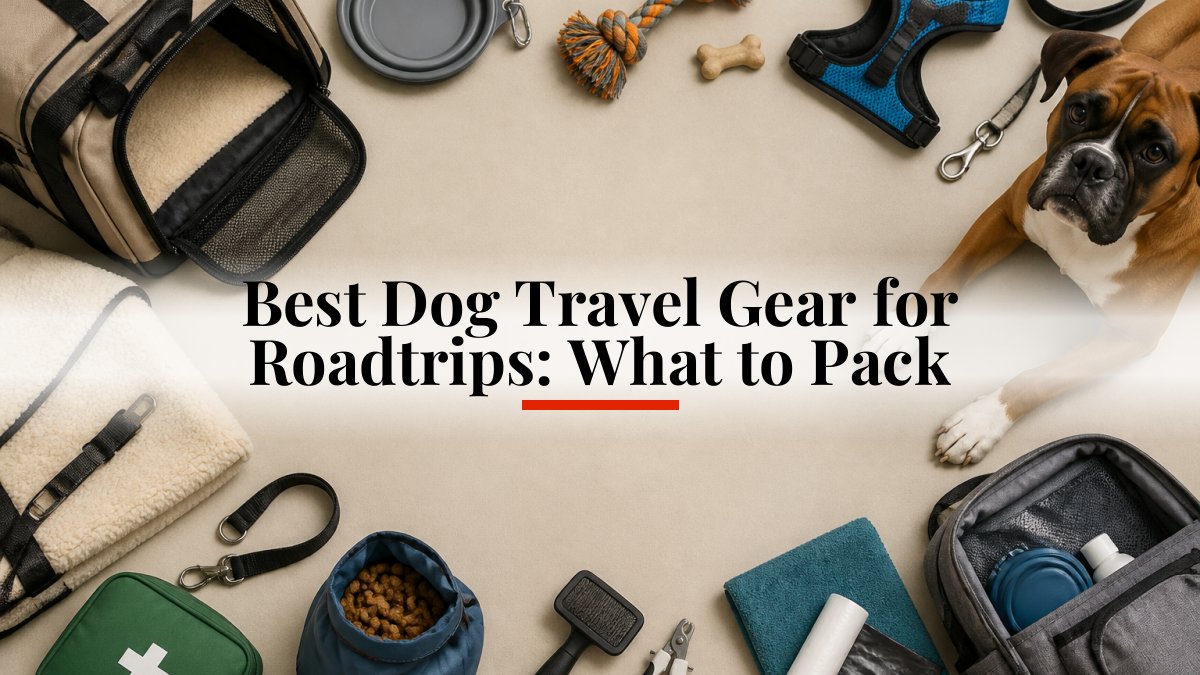
Best Dog Travel Gear for Roadtrips: What to Pack
Last Updated: November 1, 2026
Quick Summary
The best dog travel gear for roadtrips covers restraint, protection, hydration, and feeding. Start with a fitted car harness sized by chest girth rather than weight, add a waterproof seat cover, and pack a travel water bottle, collapsible bowl, and pre-portioned meals.
- Measure chest girth, neck circumference, and back length, then size by shape rather than weight.
- A crash-tested claim only counts if the maker states the standard, speed, and dummy weight.
- Stop every two to three hours for water, a bathroom break, and five to ten minutes of walking.
- Feed at a stop and wait 20 to 30 minutes before driving to reduce carsickness.
- Waste bags and a copy of vet records are the two items most often left behind.
Table of Contents
- Quick Comparison: Best Dog Travel Gear for Roadtrips
- How to Choose a Dog Car Safety Harness That Fits
- Seat Covers, Crates, and Carriers That Protect Your Vehicle
- Dog Travel Water Bottle and Hydration Gear for the Road
- Food, Bowls, and Treats: Portable Feeding Without the Mess
- The Complete Dog Road Trip Packing List
- How Often to Stop on a Road Trip With a Dog
- Stock Your Roadtrip Kit at Shop and Bark
- Frequently Asked Questions
Quick Comparison: Best Dog Travel Gear for Roadtrips
The best dog travel gear for roadtrips covers four jobs: restraint, protection, hydration, and feeding. This guide breaks down each category, explains how to size a harness correctly, and ends with a packing list you can screenshot before you leave.
Road trips with a dog fail in predictable ways: the harness is the wrong size, water spills across the back seat, the dog gets fed at 8 a.m. and then rides for six hours. None of that is solved by spending more, it is a selection problem, and it starts with the restraint.
Below, we walk through what actually matters in each category, where cheap gear lets you down, and how to build a kit that fits your dog and your trip length.
How to Choose a Dog Car Safety Harness That Fits
A dog car safety harness is a restraint system that connects your dog to the vehicle's seat belt, keeping them in place during braking and turns. Fit matters more than brand. A loose harness lets a dog twist free; a tight one rubs the chest raw on a long drive.
Measure three points, then size by shape, not weight
Measure chest girth at the widest part behind the front legs, neck circumference, and back length from collar to tail base. Compare against the size chart, not your dog's weight, a 55-pound greyhound and a 55-pound bulldog need completely different harness cuts.
Use these shape rules when the size chart puts you between sizes:
- Deep-chested, narrow breeds (greyhounds, whippets, boxers): size to the chest girth, not the neck. A harness that fits the neck will gap at the chest and allow a leg to slip out.
- Broad-chested, short-legged breeds (bulldogs, corgis, dachshunds): look for a harness with a longer chest panel and adjustable straps at both the neck and chest. A standard cut will ride up into the throat.
- Small breeds under 15 pounds: choose a harness rated for the dog's actual weight with a padded chest plate; thin strapping concentrates load on a small frame.
- Senior dogs with joint issues: prioritize a harness with a wide, low-cut chest panel and a handle over the back so you can help the dog in and out of the car without lifting by the ribs.
- Puppies: buy for current measurements, not adult size. An oversized harness defeats the purpose, and most puppies outgrow a harness within one or two growth spurts anyway.
What 'crash-tested' actually means
Many harnesses are marketed as crash-tested, but the claim is only meaningful if the maker states the test standard and the speed. Ask three questions: What standard was used? At what speed? With what dummy weight? If the listing cannot answer all three, treat the harness as a comfort product, not a safety device.
A harness that clips to the collar rather than a chest plate puts all the load on the dog's throat in a sudden stop. You can browse a seatbelt harness with a zinc alloy hook to compare options.
Install it correctly, every trip
Route the seat belt through the harness's designated loop, not around the dog's body, and pull it snug so the dog can sit and lie down but cannot reach the front seat. A correctly sized but incorrectly installed harness behaves like a loose one, so check the fit at every stop.
Best for: dogs that ride in the back seat and walk on the same trip. Skip if: your dog rides in a crate, where a harness is redundant.
Seat Covers, Crates, and Carriers That Protect Your Vehicle
The back seat takes the damage on every dog trip: fur woven into fabric, mud, drool, and the occasional accident. A waterproof seat cover solves most of it for a fraction of what detailing costs, but the right cover depends on how your dog rides, and the crate-or-carrier decision depends on the dog's size and your vehicle's layout.
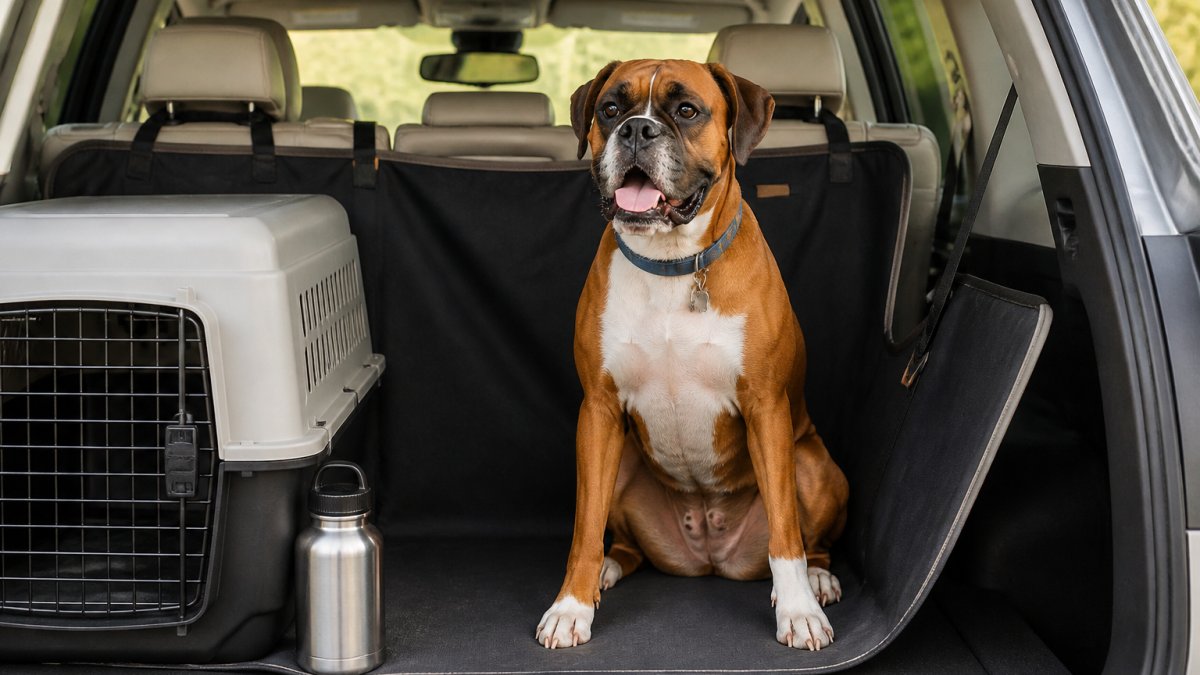
Seat covers: match the style to the dog's behavior
Hammock-style covers anchor to the front and rear headrests and bridge the seat gap, which stops a dog from sliding into the footwell.
Material matters more than style. Look for a waterproof backing, not just a water-resistant face fabric, a cover that beads water on top but soaks through the stitching will let moisture reach the seat on a long, humid drive.
For a dog that paces, add a barrier: a mesh seat fence keeps the dog in back and keeps your attention on the road.
Crates and carriers: size by the dog, not the cargo area
Crates suit dogs that settle better in an enclosed space, and they are the safer choice for a dog that panics in a harness.
Size the crate so the dog can stand, turn around, and lie down fully extended, no larger. An oversized crate lets the dog slide on braking, the opposite of the protection you are buying.
Carriers work for small dogs and for the walk from parking lot to hotel lobby.
Best for: dogs that shed heavily or get carsick. Skip if: your dog is already crate-trained and travels in a secured kennel.
Dog Travel Water Bottle and Hydration Gear for the Road
A dog travel water bottle is a portable bottle designed to dispense water on the move, usually with a built-in trough or a squeeze design.
Offer water at every stop, not just when the dog looks thirsty.
Collapsible bowls earn their place in the kit.
Pack more water than you think you need.
Best for: any drive longer than two hours. Skip if: you are doing a short errand run and the dog stays home.
Food, Bowls, and Treats: Portable Feeding Without the Mess
Feeding on the road is a logistics problem, not a shopping problem. A foldable travel feeder and water bowl covers the bowl side of that list.
Pre-portion meals into zip-top bags at home, one bag per meal.
Treats should be small, low-odor, and not prone to melting. Skip anything chocolate-adjacent and check ingredient lists on chews you have not bought before.
Watch out: feeding a full meal right before a long stretch of driving is the fastest route to carsickness.
Best for: multi-day trips with hotel or campsite stops. Skip if: your trip is a single day out and back.
The Complete Dog Road Trip Packing List
Here is the dog road trip packing list we would build for a weekend away. Adjust quantities for trip length, not for how much room you have.
| Category | Item | Why It Earns Space | Trip Length |
|---|---|---|---|
| Restraint | Fitted car harness | Keeps dog in place on braking | Any |
| Protection | Waterproof seat cover | Saves the back seat | Any |
| Protection | Mesh seat fence | Stops pacing into the front | Any |
| Hydration | Travel water bottle | Water at every stop | 2+ hours |
| Hydration | Collapsible bowl | Drink without spills | Any |
| Feeding | Pre-portioned meal bags | No scooping at stops | Overnight+ |
| Feeding | Foldable feeder | Dry food and water in one | Overnight+ |
| Cleanup | Waste bags | Rest-stop cleanup | Any |
| Comfort | Packable bed or blanket | Settles the dog in a new place | Overnight+ |
| Safety | Copy of vet records | Needed for boarding or emergencies | Overnight+ |
Two items get left behind most often: waste bags and a copy of the dog's vaccination records. Both are easy to pack and hard to replace on the road.
How Often to Stop on a Road Trip With a Dog
Stop every two to three hours for a dog on a road trip, and more often in hot weather or with a puppy, senior, or flat-faced breed. Each stop should include water, a bathroom break, and five to ten minutes of walking.
That cadence is a starting point, not a rule. A young, healthy dog on a cool day can stretch a little longer. A senior dog with joint issues cannot.
Plan stops around your dog, not your own schedule. A dog that has been in a harness for four hours will not settle for the next four, and a stressed dog makes for a stressed driver.
Never leave a dog in a parked car in warm weather, even briefly. Temperatures inside a vehicle rise fast, and cracked windows do not fix it.
Stock Your Roadtrip Kit at Shop and Bark
Building a kit piece by piece means three separate orders and three separate delivery windows. Everything is shipped from the US by UPS and USPS.
Browse Shop and Bark for restraints, seat protection, hydration gear, and portable feeding supplies in one place.
Frequently Asked Questions
What is the safest way for a dog to ride in a car?
A crash-tested harness paired with a seat belt tether, or a crash-tested crate secured in the cargo area, keeps a dog restrained during sudden stops. Look for harnesses that state they have passed crash testing, and match the size to your dog's chest girth rather than weight alone. A loose dog can become a projectile in a collision. Seat covers and hammocks protect upholstery but do not restrain the dog, so pair them with a harness for actual safety.
What should go on a dog road trip packing list?
A dog road trip packing list should cover restraint, hydration, food, waste cleanup, and comfort. Include a crash-tested harness with a seat belt tether, a dog travel water bottle plus a collapsible bowl, portioned food in a sealed container, treats, poop bags, a leash and collar with ID tags, a blanket or packable bed, and any medication. Add a towel for muddy paws and a copy of vaccination records if you cross state lines or stay at pet-friendly lodging.
How often should you stop on a road trip with a dog?
Plan a stop every two to three hours for bathroom breaks, water, and a short walk. Puppies, senior dogs, and dogs with mobility issues may need more frequent stops. Use each stop to offer water from a dog travel water bottle, let the dog sniff and relieve itself, and stretch. Cracking a window or running the AC keeps the car comfortable between stops, and never leave a dog alone in a parked vehicle in warm weather.
Do I need a dog car safety harness or a carrier for road trips?
Either can work, but choose based on your dog's size and your vehicle. A crash-tested harness tethered to a seat belt suits most dogs and takes up little space. A secured crate or carrier works well for smaller dogs and gives them a den-like space to rest. Whichever you pick, confirm it has been crash tested and fits your dog correctly. A harness that is too loose or a crate that slides around defeats the purpose.
How can I keep my dog hydrated during a road trip?
Bring a dedicated dog travel water bottle and offer small amounts at every stop rather than one large drink. A no-splash bowl or a bottle with a built-in trough limits spills in the car. Pack more water than you think you need, especially in summer, and avoid letting your dog drink from unfamiliar standing water along the route. If your dog is prone to carsickness, offer water in smaller, more frequent sips and keep food light before travel.